Riga Cathedral and organ concerts: the complete visitor guide
Riga: House of the Blackheads entrance ticket
Duration: 1-2 hours
- Mobile ticket
- Skip ticket counter
How do I visit Riga Cathedral and see an organ concert?
The Cathedral is open to tourists except during services; up-to-date hours are on the official Cathedral website. General admission is €5 (€3 for ages 11–18). The Concerto Piccolo is 20 minutes of organ music, almost every day at noon, with evening concerts on Fridays at 19:00. The Concerto Piccolo ticket is €15, bought at the Cathedral ticket desk.
| Where | Dome Square (Doma laukums), central Old Town |
| Cost | €5 entry (€3 ages 11–18); Concerto Piccolo €15 |
| Time needed | 30–45 min nave visit, +20 min for Concerto Piccolo |
| Getting there | 5–8 min walk from Town Hall Square |
| Best time | Weekday mornings for a quiet nave; check the official Cathedral website for concert days |
Riga Cathedral: 800 years of history on Dome Square
Riga Cathedral is the oldest stone building in Latvia and the spiritual heart of the city. Its founding in 1211 — by Bishop Albert of Buxhoeveden, the founder of Riga itself — predates most of the city’s other historic buildings. Standing on Dome Square (Doma laukums), it anchors the Old Town both physically and historically.
The name “Doms” comes from the Latin “domus” (house) and the Low German “Dom” (cathedral) — you will hear both names used. In Latvian it is Rīgas Doms; in everyday English, Riga Cathedral or the Dome Cathedral.
What you are looking at: 800 years of architecture
Unlike churches built in a single period, Riga Cathedral is a palimpsest of architectural styles reflecting eight centuries of construction, modification, and restoration:
The Romanesque core (13th century): the oldest sections of the nave walls and some portal elements retain the round arches and massive masonry characteristic of Romanesque church building. Best visible in the north aisle.
Gothic modifications (14th–15th century): pointed arches, Gothic windows, and ribbed vaulting were added as the church was expanded and the interior heightened. The choir and part of the nave reflect this Gothic refacing.
The Baroque tower (1776): the distinctive copper-covered octagonal tower and dome visible on the exterior is an 18th-century Baroque addition that replaced an earlier Gothic tower. It gives Riga Cathedral its distinctive mixed profile — medieval nave with Baroque crowning.
The cloister (13th–14th century): a beautiful Romanesque cloister on the south side is one of the most intact medieval cloister spaces in the Baltics. The cloister now houses the Museum of the History of Riga and Navigation.
The interior: predominantly 19th-century in appearance — the interior was heavily modified in the 1880s when the organ was installed and the nave was re-pewed and modernised. The effect is a clean, light-filled Protestant interior rather than the darker medieval atmosphere of some older Catholic churches.
The organ: the centrepiece
The Cathedral’s organ is the main reason most visitors come. Built by E.F. Walker & Co. of Ludwigsburg, Germany and installed in 1884, the instrument contains 6,718 pipes spread across four manuals and a pedal. When installed, it was the fourth-largest organ in the world.
The organ has been restored multiple times — most comprehensively in 1983–1984 and again in 2013. The current state of the instrument is considered excellent.
Hearing the organ in the Cathedral space is a genuine experience — the 10–20 second reverberation time in the stone nave means that full chords linger and overlap, creating a sound environment impossible to reproduce elsewhere.
The Concerto Piccolo: this is the standard tourist organ recital format — 20 minutes of organ music, almost every day at noon, with evening concerts on Fridays at 19:00, for visitors specifically attending the concert. The format is designed for tourists who want to hear the organ without committing to a full classical concert evening.
Tickets for the Concerto Piccolo are sold at the Cathedral ticket desk. Pairing the recital with a Cathedral visit is the smoothest way to combine the organ experience with the building itself.
Full organ concerts: longer concerts are scheduled as part of Riga’s classical music season. These attract serious organ enthusiasts and music lovers. Prices differ from the Concerto Piccolo; see the programme on the official Cathedral website for dates and prices.
Visiting the Cathedral as a tourist
General visiting hours: up-to-date hours are on the official Cathedral website. Hours vary around service times.
Admission: €5 for adults (€3 for ages 11–18) for tourist access to the nave. Free during services (though tourist exploration during services is not appropriate — services are religious gatherings).
What to see
- The nave and the organ (view from the floor — there is no separate access to the organ loft for tourists)
- The medieval tombstones embedded in the floor of the nave (Hanseatic merchants, bishops, and notable Rigans from the 14th–17th centuries)
- The Baroque pulpit (17th century, ornately carved)
- The cloister walkway and the archaeological exhibitions within it
- The Museum of the History of Riga and Navigation (in the cloister buildings) — a separate museum with its own admission
Photography: permitted in the Cathedral interior without flash. The organ pipes make an impressive architectural photograph from the nave floor.
Dome Square: the space around the Cathedral
Dome Square (Doma laukums) is the largest public square in Old Town, and the Cathedral’s main facade faces it. The square itself has been redesigned multiple times; the current open, paved square dates from Soviet-era clearances that removed the historic building density that once crowded around the Cathedral.
Cafés on the square: the outdoor cafés around Dome Square are popular and pleasant in summer. Prices reflect the location — tourist premium applies.
The Christmas market: in December, the square becomes the main Christmas market location, one of the most atmospheric in Northern Europe. The Cathedral facade lit against winter night sky provides the backdrop. See our public holidays and events calendar for December event details.
Fountain area: a central fountain provides a meeting point and a spot for photos with the Cathedral tower visible above.
Combining Cathedral with nearby Old Town sights
The Cathedral is geographically central in Old Town and connects naturally to:
- Town Hall Square and House of the Blackheads: 5 minutes east. See our House of the Blackheads guide.
- Three Brothers: 3 minutes north, via Mazā Pils iela. See our Three Brothers guide.
- Riga Castle: 5 minutes northwest, along the Daugava bank. See our Riga Castle guide.
- St. Peter’s Church viewing tower: 10 minutes east, via Skārņu iela. See our St. Peter’s Church guide.
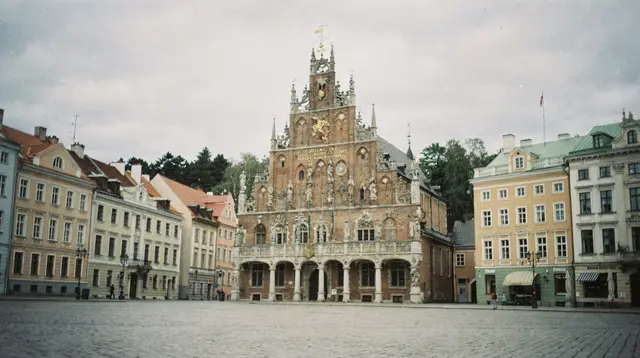
If you want to see the inside of the Blackheads building after the Cathedral, you can book the House of the Blackheads entrance ticket ahead of your walk.
For a combined Cathedral and Old Town morning, the Old Town walking tour includes the Cathedral square as a stop with historical context. The organ concert (Concerto Piccolo) works well at midday after a morning of sightseeing.
Practical tips for the organ concert
Arrive 10–15 minutes early: seating is unreserved in the nave. Arriving early lets you choose a position — the acoustics are best toward the centre of the nave. Sitting near the front gives you a clearer view of the organ pipes; sitting toward the back maximises the reverberant acoustic experience.
What to wear: the Cathedral is a religious space in use. Shoulders covered is appreciated; no need for formal dress. It will be cool inside even on warm days — a light layer is sensible.
Photography during the concert: generally permitted silently. Check whether flash and video are allowed on the specific concert occasion.
Combine with Cathedral visit: if you buy a Concerto Piccolo ticket, arrive 20–30 minutes before the recital to explore the nave, cloister, and floor tombstones before taking your seat.
Deciding between a quiet visit and a concert
Visitors often treat the Cathedral and the organ concert as one decision, but they are two different experiences. A daytime nave visit is about looking: the floor tombstones, the pulpit, the pipes high above the west end and the light moving across a clean, uncluttered interior. A concert is about listening, and you will spend most of it seated, looking toward the organ rather than wandering. If you only have room for one, think about what kind of traveller you are. People who love architecture and history tend to get more from an unhurried daytime visit. People who remember places by sound tend to talk about the concert for years.
If you can fit both, the best rhythm is a quiet look around on a weekday morning, then a return for the recital later, when you already know the building and can simply settle in and listen. Seeing the nave empty first makes the sound of a full instrument filling it feel far bigger.
How the visit fits into a wider Old Town day
The Cathedral works best as an anchor rather than a standalone stop. Because it sits in the middle of the historic centre, you can build a relaxed route around it without any rushing. Our Old Town district guide explains how the quarter is laid out, and the self-guided Old Town walking route shows one sensible order for the main sights. If you prefer a short loop built around the square, the Town Hall Square and Blackheads area guide covers the neighbouring space.
For travellers who like history woven into their sightseeing, the Swedish Gate and medieval walls make a good companion to the Cathedral, since both belong to the medieval city that Bishop Albert founded. Ending the afternoon with a view over the rooftops from St. Peter’s Church gives you a sense of how the Cathedral tower sits within the skyline you just walked through.
Slotting the Cathedral into an itinerary
Short stays leave little slack, so it helps to know where the Cathedral belongs. On a first visit, it is a natural fit for the morning of your main Old Town day, which is exactly how the one-day essential itinerary treats the centre. With more time, the two-day best-of plan lets you separate the daytime visit from an evening concert, so neither feels squeezed. Couples planning a slower, more romantic weekend may like the couples weekend itinerary, where an evening of organ music fits easily between dinner and a stroll through the lit-up streets.
Going with children or a mixed group
A quiet church and a recital can be a lot to ask of small children, so be realistic about your group. The short concert format is far easier than a long recital, and a daytime nave visit lets younger visitors move at their own pace, provided everyone keeps their voices low. The cloister and the museum in the cloister buildings give older children something concrete to look at. For ideas on filling the rest of the day with activities that suit younger travellers, see the guide to Riga with kids.
Rainy days and cold weather
Riga weather changes quickly, and an indoor sight with a strong draw is valuable when the forecast turns. The Cathedral is a good wet-weather choice: you can spend a long, absorbing stretch inside the nave, the cloister and the museum without needing to be anywhere else. In winter the interior is cool, so layers matter, and a concert after dark pairs well with the festive atmosphere on the square. The winter guide and the month-by-month weather guide will help you plan around the season you are visiting in.
Etiquette inside the nave
The Cathedral is a living Lutheran church, so a few habits go a long way. Keep conversation quiet, silence your phone before you enter, and step aside from the main aisle if you stop to photograph. During a concert, hold your applause for the moment the audience clearly starts it, and avoid moving around while music is being played. Treat the floor tombstones with care and do not stand on carved details more than you need to when walking. These small courtesies are appreciated by the staff and make the visit more pleasant for everyone sharing the space.
Where to eat or drink afterwards
After the music, you will probably want somewhere to sit and talk about what you heard. The cafés on the square are convenient but carry the usual premium, so if you want better value, walk a few minutes into the side streets. Our guide to restaurants where locals eat and the honest list of overpriced Old Town restaurants will help you choose well and avoid the obvious tourist traps around the square.
Frequently asked questions about Riga Cathedral
Is Riga Cathedral the same as Riga Dome Cathedral?
Yes — “Riga Cathedral,” “Riga Dome Cathedral,” “Dome Cathedral,” and “Rīgas Doms” all refer to the same building.
What religion is Riga Cathedral?
Riga Cathedral is Evangelical Lutheran. Latvia’s largest church is the Latvian Evangelical Lutheran Church; the Cathedral is its most important building.
Is the Museum of the History of Riga worth visiting?
Yes if you want to understand Riga’s development from a medieval trading city to the present. The museum occupies the cathedral cloister buildings and has a comprehensive (if somewhat densely presented) exhibition. Allow 60–90 minutes. Admission is separate from Cathedral entry.
When was the organ last restored?
A major restoration of the Walker organ was completed in 2013, bringing the instrument to excellent playing condition. The organ is tuned and maintained regularly as an active concert instrument.
Can you hear the organ from outside the Cathedral?
When the organ is played at full power, yes — the sound does project through the Cathedral walls somewhat. But the full experience requires being inside the nave. The difference between hearing the organ from Dome Square and from inside the nave is enormous.
Is the Cathedral worth visiting if there’s no concert on?
Yes — the nave alone, with its medieval tombstones, Baroque pulpit, and the sheer scale of the Walker organ visible from the floor, justifies the €5 entry even without hearing it played. Pair it with a walk to nearby Town Hall Square for a fuller Old Town morning.
Top experiences
Bookable activities with verified prices and instant confirmation on GetYourGuide.
Photos show the place, not the operator’s tour.