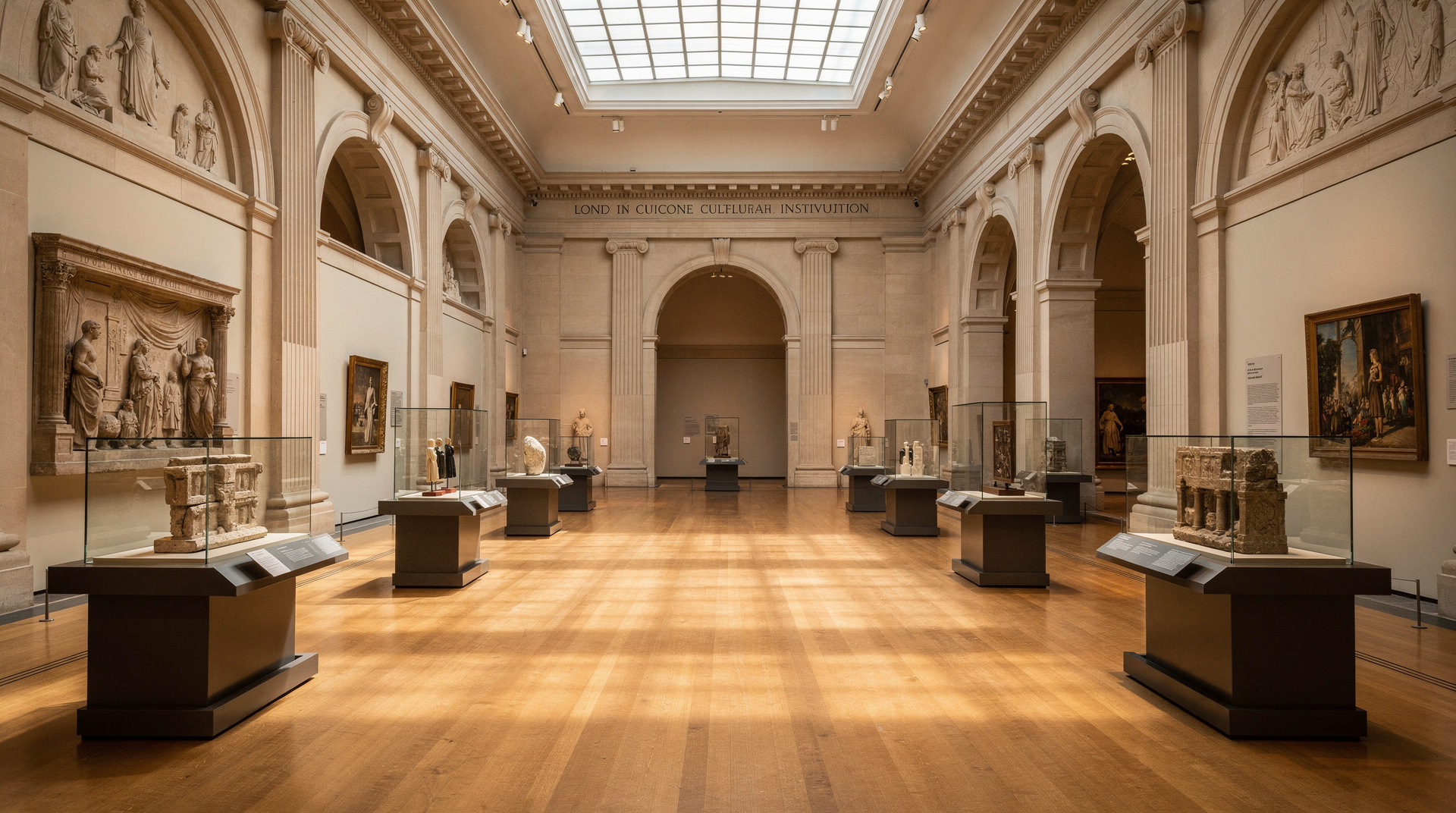
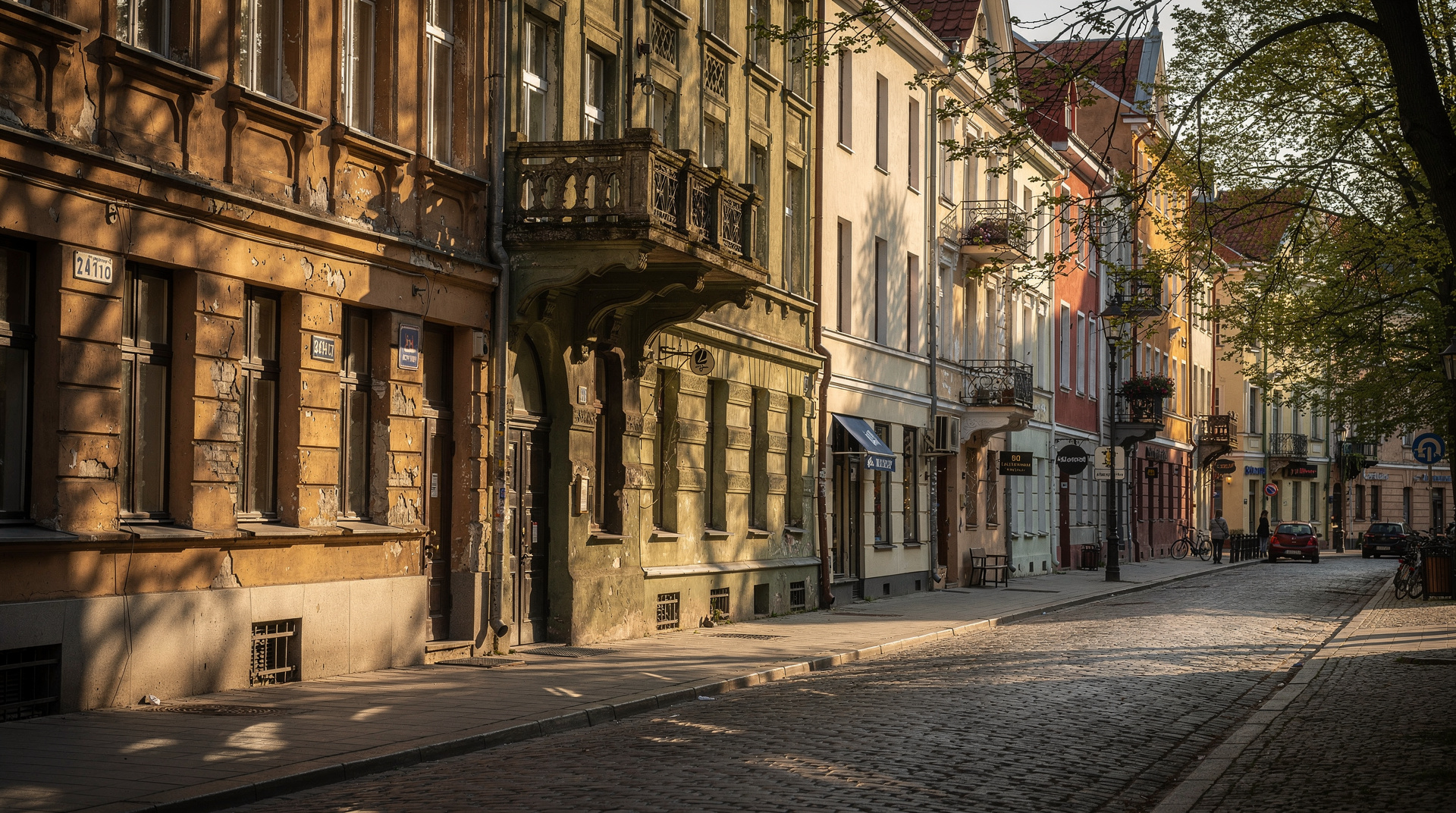
Riga history museums overview
Riga: Old Town guided tour and Occupation Museum entry
Duration: 3 hours
- Museum entry
- Small group
What is the best history museum in Riga?
The Museum of the Occupation of Latvia (free, opposite House of the Blackheads) is the most essential — powerful documentation of the Soviet and Nazi occupations 1940–1991. The Corner House (former KGB headquarters) is the most disturbing and most important. Both are in the Old Town.
Understanding Riga’s history museums — why they are different
Riga’s history museums are not gentle; they could not be. Latvia spent 51 years under foreign occupation (Soviet 1940–1941, Nazi 1941–1944, Soviet again 1944–1991), and the history that needs to be documented and explained is not comfortable material. The Occupation Museum and the Corner House are among the most emotionally demanding historical museums in Europe — comparable in impact to the Imperial War Museum in London or the House of Terror in Budapest — and they are both essential and important.
The contrast with the art museums is stark. The history institutions are dealing with living memory (the last Soviet deportations from Latvia to Siberia were in the 1990s; there are survivors still living), and the documentation is raw rather than curated for palatability. This is not a criticism — it is precisely what makes them important.
This guide covers the major history museums in honest order of significance.
| Must-see | Museum of the Occupation of Latvia (free), Corner House (€5) |
| Time needed | Full day for the two essential museums, half-day for one |
| Where | Both in/near Old Town, 15 min walk apart |
| Best time | Weekday mornings, avoid rushing between sites |
| Booking | Corner House guided tour recommended in advance |
Museum of the Occupation of Latvia — the essential stop
The Latvijas Okupācijas muzejs on Rātslaukums (Town Hall Square), immediately adjacent to the House of the Blackheads, is the most important historical museum in Latvia. It is free to enter (deliberately, to remove any barrier to access) and documents the period 1940–1991 — the two Soviet occupations and the Nazi occupation of 1941–1944 — through personal testimonies, documents, photographs, artifacts, and audiovisual materials.
The exhibition is organized chronologically and thematically. The sections on the mass deportations to Siberia (particularly June 1941, when approximately 15,000 Latvians were deported in a single night) are among the most devastating historical exhibitions anywhere in Europe. The testimony booths, where visitors can listen to firsthand accounts from survivors of deportation and imprisonment, are particularly affecting.
What the museum does exceptionally well: The individual human scale. Rather than presenting statistics alone, the museum foregrounds specific people — their photographs, their testimonies, their fates. The deportation maps showing which streets and buildings lost how many residents on which nights give the abstract numbers a specific geographical reality.
Practical: Free entry. Guided tours available (€5–8). Open Tuesday–Sunday 10:00–18:00. Closed Monday. Allow 1.5–2.5 hours for a thorough visit. The museum has a reading room with research access to documentation for those with family connection to Latvia.
Riga: Old Town guided tour and Occupation Museum entry — €38, 3 hoursThis guided tour combines an Old Town walk with a museum visit, providing historical context for the Old Town before entering the Occupation Museum — a useful sequence for first-time visitors.
The Corner House (Stūra māja) — the KGB headquarters
The Stūra māja at Brīvības iela 61 was the operational headquarters of the Soviet secret police (successively NKVD, MGB, MVD, and KGB) in Latvia from 1940 to 1991. The building was notorious among Latvians throughout the occupation period — everyone knew what happened inside, and the knowledge that you could be taken there created a specific atmosphere of fear that was part of the Soviet control mechanism.
The building is now a museum. Entry €5. The guided tour (strongly recommended over self-guided) walks through the operational offices, the interrogation rooms, and the cells in the basement where prisoners were held, often without formal charges. The cells retain their original structure; the interrogation rooms have been preserved with original fixtures where possible.
The museum covers specific cases — named individuals, their crimes as defined by Soviet law, the evidence against them, and their fates. Many were shot; many were sent to Siberia. The documentation is precise and careful, neither sensational nor minimizing.
Honest assessment: This is a psychologically difficult visit. The physical structure of the cells and interrogation rooms — low ceilings, heavy doors, tiny dimensions — creates a visceral understanding of what imprisonment here meant. Visitors who have read about Soviet political terror before visiting will find the museum deepens and personalizes that knowledge. Visitors arriving without that background will find it simultaneously informative and shocking.
Appropriate for adults and mature teenagers. Not recommended for children under 14.
See the detailed Corner House guide for the full history and visitor information.
Museum of the History of Riga and Navigation
The Rīgas vēstures un kuģniecības muzejs at Palasta iela 4, in the Old Town near the Dome Cathedral, is Latvia’s oldest museum (founded 1773) and covers Riga’s history from its founding as a Hanseatic trading city in 1201 through the present. The collection is broad and sometimes uneven, but several sections are outstanding:
Medieval and Hanseatic Riga (13th–16th century): The archaeological collection from excavations in the Old Town provides the most complete picture available of medieval Riga as a trading city. Original artifacts — ceramics, jewelry, metalwork, textiles — provide a tangible connection to the medieval merchant culture.
The Hanseatic period: Riga was a full Hanseatic League member from 1282. The museum’s section on this period covers the trade routes, the merchant families, and the physical development of the city in the 14th–16th centuries. Good use of maps and architectural documentation.
19th-century Riga: The period of Art Nouveau development, with documentation of the architectural commissions and the social context that produced them.
Practical: Entry €5. Open Tuesday–Sunday 10:00–17:00 (May–September until 18:00). The building is a converted medieval residence; some sections have low ceilings and uneven floors. Audio guide available €2.
Riga Ghetto and Holocaust Museum
The Rīgas geto un Latvijas holokausts muzejs in the Maskavas Forštate district (Maskavas iela 14a) covers the history of the Jewish community in Latvia before and during the Nazi occupation (1941–1944), during which 70,000 Latvian Jews were murdered — approximately 90% of the prewar Jewish population.
The museum is located on the grounds where the Riga Ghetto stood, and the outdoor memorial section includes a preserved street from the ghetto period. The documentation is comprehensive and the museum has invested in survivor testimonies and personal histories as the core interpretive approach.
Practical: Entry €3 (suggested donation). Open Monday–Thursday 10:00–17:00, Friday 10:00–16:00. Closed Saturdays, Sundays, and Jewish holidays. See the full Riga Ghetto Museum guide.
Honest recommendation: sequencing your history visits
The Occupation Museum and the Corner House are the two most important sites and are both in the Old Town, within 15 minutes’ walk of each other. Visit them on the same day — but not both in the same two-hour block; the material requires processing. The recommended sequence: Occupation Museum in the morning (2 hours), lunch break at a café away from the museum, Corner House in the afternoon (1.5 hours).
The Museum of the History of Riga and Navigation is a useful complement for the medieval and Hanseatic context that the Occupation Museum does not cover — visit it on a separate day as part of the Old Town circuit.
See also: Riga Soviet history walking guide for the outdoor context between these museums.
The academic museum context — what is NOT in the public collections
Latvia has invested heavily in public history museums since independence, but the most sensitive research materials are still primarily accessible only in specialist archives rather than public museum exhibitions. Understanding this limitation helps calibrate expectations.
The Central Archives of Latvia (Latvijas Nacionālais arhīvs) in Riga holds the largest collection of Latvian historical documentation, including extensive Soviet-period KGB files that were transferred to Latvian custody in 1991. A significant portion of these files have been digitized and are being progressively made available, but the cataloging project is ongoing and full public access remains restricted for some categories.
For visitors with genealogical or family history connections to Latvia — particularly those with ancestors who were deported or imprisoned in the Soviet period — the archives have a research access program. The Occupation Museum’s reading room can provide referrals to the relevant archival resources.
The Soviet legacy in public space
One of the distinctive aspects of Riga’s historical landscape is the continued presence of Soviet monuments in public space, creating an ongoing public conversation about historical memory that is not yet resolved.
The most prominent is the Victory Monument in Uzvaras Park (Victory Park) on the west bank of the Daugava — a 79-meter Soviet war memorial erected in 1985, nominally celebrating Soviet victory in World War II but understood by many Latvians as a Soviet occupation monument. Periodic political debate about its removal has not resulted in action as of 2026.
The Latvian Parliament has passed legislation permitting the removal of Soviet-era monuments that glorify occupation, and several smaller Soviet monuments across Latvia have been removed since 2022 (the context of the Russian invasion of Ukraine accelerated this process). The Victory Monument’s size and location in a park used by Riga’s Russian-speaking community makes its removal politically more complex.
For visitors, the monument is a visible example of the unresolved historical narratives that the Corner House and Occupation Museum document more explicitly.
The Jewish heritage circuit — connecting the history museums to physical sites
The Riga Ghetto and Holocaust Museum is geographically and historically connected to several outdoor sites that should be visited in conjunction rather than in isolation:
Maskavas Forštate (Moscow Quarter): The neighborhood where the Riga Ghetto was located in 1941–1943. Several streets retain original buildings from the period; a street reconstruction is on the museum grounds. Walking the streets between the museum and the preserved ghetto boundary markers (at Maskavas iela and the surrounding blocks) gives physical context that the museum exhibits cannot fully convey.
Zanis Lipke Memorial (Mazā Balasta dambis 8): A memorial to a Riga harbor worker who saved 50+ Jewish people from Nazi deportation by hiding them in a bunker under his woodshed. The memorial is 3 km from the Ghetto Museum and is a profoundly affecting site — small, personal, and focused on a single act of extraordinary moral courage. See the Riga Ghetto Museum and Zanis Lipke Memorial guide.
The Great Choral Synagogue Memorial: The site of Riga’s largest prewar synagogue, burned by Nazi forces on July 4, 1941 with the congregation inside. The site on Gogola iela has a memorial marker and is accessible as part of the Jewish heritage walking circuit. See the Great Choral Synagogue Memorial guide.
Planning a complete historical Riga day
For visitors who want to understand Riga’s 20th century history as completely as possible in a single day:
09:00: Arrive at the Museum of the History of Riga and Navigation (Palasta iela 4). Focus on the medieval Hanseatic section and the early 20th century (90 minutes).
10:30: Walk south to the Occupation Museum (5 minutes). Allow 2.5 hours — do not rush the individual testimony sections.
13:00: Lunch break at Folkklubs Ala Pagrabs (Peldu iela 19, 5 minutes’ walk) — this is the right place to decompress after the Occupation Museum. The traditional Latvian food and folk atmosphere provides cultural grounding.
15:00: Walk north to the Corner House (Brīvības iela 61, 20 minutes’ walk). Book a guided tour in advance (recommended). Allow 1.5–2 hours.
17:00: Optional: evening walk along the route of the Soviet history guided tour, ending at the Academy of Sciences for the panorama view at sunset.
Total: a demanding but coherent day that gives a genuine understanding of what Riga’s 20th century means for the city’s present character.
If a single deep day feels like too much, the Riga Jewish history walking guide and the Riga old town self-guided walking route both let you space the material across two lighter days instead — useful if you’re travelling with people who find one museum enough at a time.