Taste Riga: market tour with cooking class — what to expect
Taste Riga: guided market tour and cooking masterclass
Duration: 4 hours
- Tastings included
- Cooking class
What is the Taste Riga market tour with cooking class and is it worth €95?
The Taste Riga experience is a 4-hour combination: a guided tour of the Central Market where you choose ingredients, followed by a hands-on Latvian cooking class where you prepare a meal with what you selected. At €95 it is the most complete single food experience in Riga. Rated 4.9/5 with 85 reviews. Worth it for visitors who want to understand Latvian food beyond just eating it.
The concept: source to table in one afternoon
The Taste Riga market tour with cooking class is built on a simple premise: you go to the Central Market, you choose the ingredients with a guide who explains what you are selecting and why, you bring them back to the kitchen, and you cook with them. The farm-to-table principle is compressed into a 4-hour city experience.
This is, pedagogically, the best possible structure for a cooking class. Seeing the raw ingredients in their natural market context — smelling the smoked fish, handling the root vegetables, tasting the cultured dairy at source — creates a connection to the cooking that is absent when ingredients simply appear pre-portioned on a kitchen counter. When you dice the beet you tasted at the market, you understand it differently than if it were simply the next ingredient in a recipe.
| Where | Riga Central Market, then a kitchen facility nearby |
| Cost | Around €95 per person |
| Time needed | 4 hours total (market ~1.5 hrs, cooking ~2–2.5 hrs) |
| Getting there | Meet at the Central Market main entrance, Nēģu iela side |
| Best time | Any season — the menu adapts to what’s in the market |
The market tour component
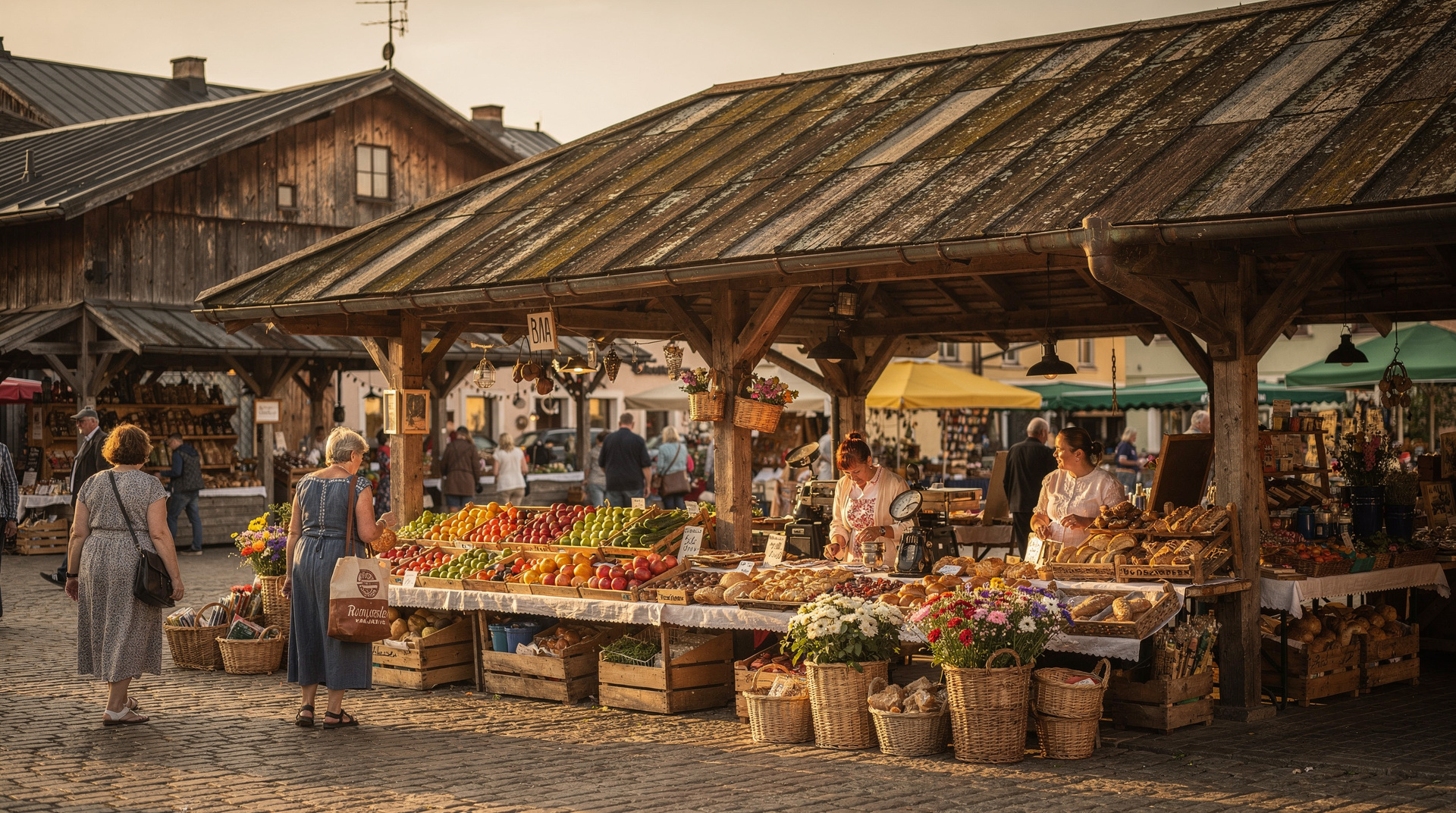
The experience begins at the Central Market (Centrāltirgus). The guide — typically the same person who will lead the cooking class — walks you through the market’s history: the Zeppelin hangar origins, the UNESCO listing, the specific geography of the five pavilions. This is not perfunctory orientation; the guide has specific knowledge of the individual vendors and takes you to the ones worth visiting.
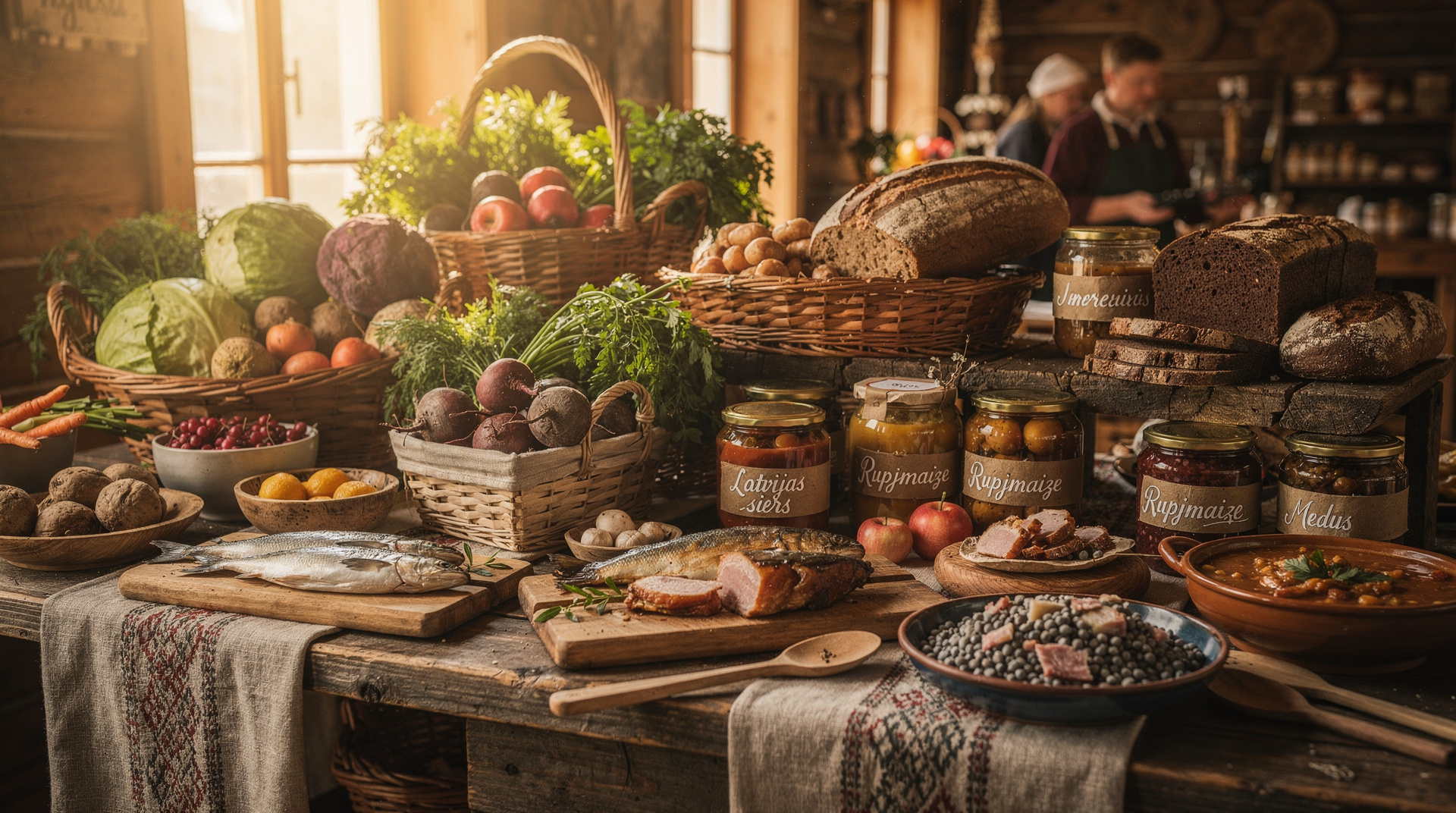
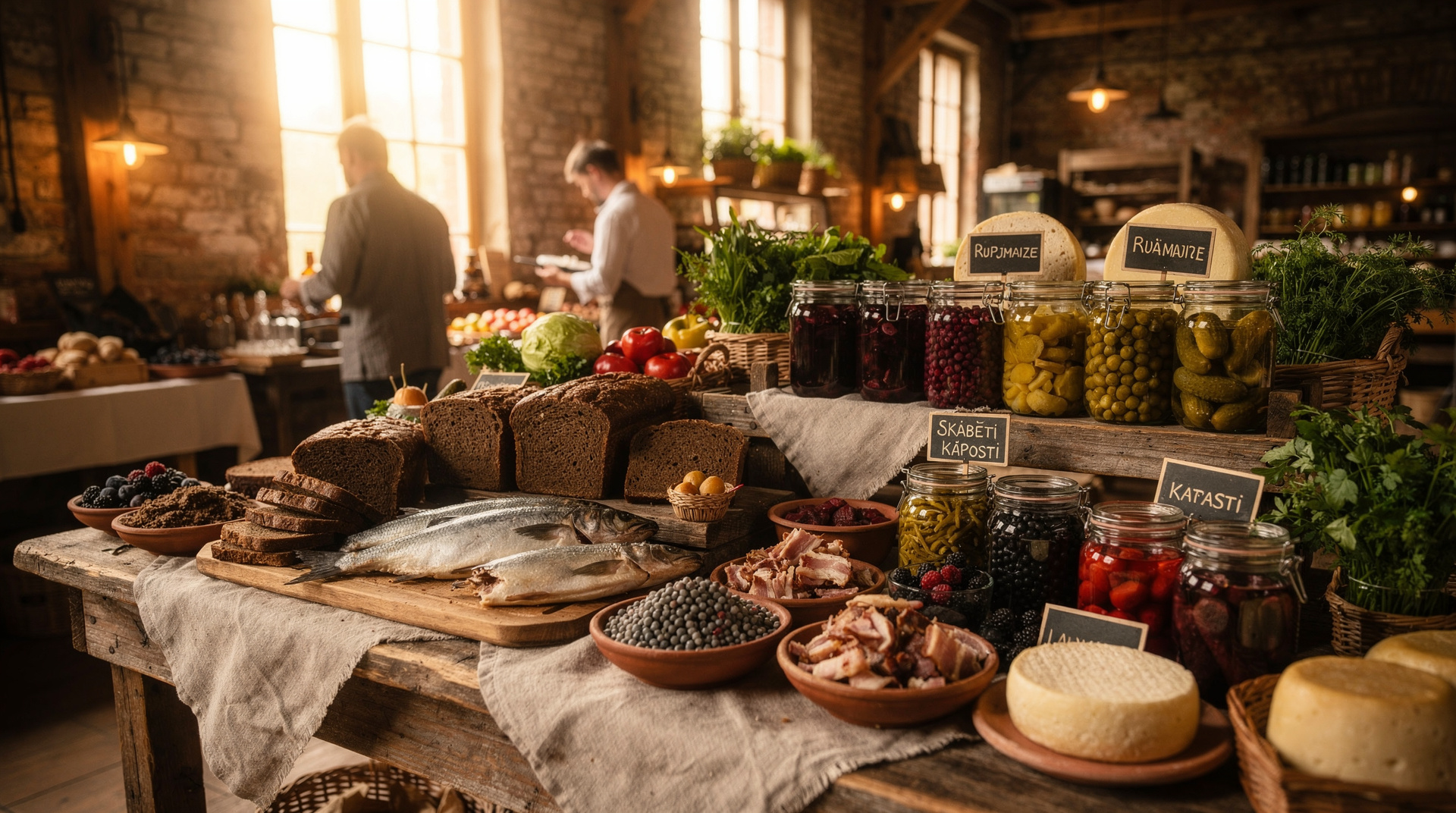
The market tour lasts approximately 1.5 hours. You will visit at minimum the dairy pavilion (for Latvian cheeses, cultured dairy, and rye bread), the vegetable section (for seasonal produce), and depending on the planned menu, the fish or meat pavilion. You taste as you go — the guide facilitates tastings at vendor stalls.
The purchases made during the market tour are the ingredients for the cooking class. This means the menu is partly determined by what looks best at the market on the day of your class — which is a feature, not a bug. Cooking with peak-season market produce is the most honest way to learn a seasonal culinary tradition.
Book the Taste Riga market tour and cooking masterclass (€95, 4 hours)The cooking class component
After the market tour, the group moves to the kitchen facility. The cooking class runs approximately 2–2.5 hours and covers 3–4 dishes: typically a main, a soup, and a dessert or pastry component.
Typical dishes (varies by season):
Summer: Cold beet soup (aukstā biešu zupa) with fresh beet greens from the market, cucumbers, radishes, and kefir; pīrāgi with filling made from market pork and onions; biezpiena pankūkas (cottage cheese pancakes with jam and sour cream) for dessert.
Autumn/Winter: Warming root vegetable or mushroom soup using dried mushrooms from the market; pork preparation with sauerkraut and potatoes; grey peas with bacon; and a dairy-based dessert.
The cooking is genuine instruction, not demonstration. You make the pīrāgi dough yourself — mixing, kneading, resting, filling, shaping, and baking. You prepare the filling. You taste at each stage. The chef explains the why, not just the what: why the rye bread uses sourdough starter rather than commercial yeast; why the pork is smoked before being added to the pīrāgi filling; why the beet soup is served cold in summer and why that is actually unusual in Baltic cooking.
What makes this experience different from a standard cooking class
The market grounding. The cooking class component of the Taste Riga experience is not better than the standalone chef masterclass (€85) in terms of cooking instruction. What it adds is the market context — the experience of choosing the ingredients and understanding where they come from — which changes what you do with the cooking instruction.
Seasonal menu. Because the menu is partly determined by the market on the day, it is genuinely seasonal rather than a fixed curriculum. The spring version of this class is different from the autumn version in ways that reflect how Latvian cooking actually works.
The Central Market as classroom. Learning about Latvian food culture while standing in front of a vendor at the world’s largest covered market, tasting smoked eel and Latvian farmers’ cheese, is a fundamentally different experience from learning about it from a recipe sheet in a kitchen.
The honest caveats
Weather matters for the market section. The outdoor section of the Central Market — where many of the most interesting small vendors operate — is exposed. A rainy morning in October is a different experience from a sunny morning in June. The covered pavilions are fine in any weather; the outdoor vendors are weather-dependent.
€95 is not cheap. This is the most expensive cooking-related experience in Riga. The value calculation: you get a guided market tour (worth €40–43 as a standalone experience), a 3-hour cooking class (worth €85 standalone), and a meal. The total standalone cost would be €125–130; the combined package at €95 represents genuine savings. It is still €95. Whether this is appropriate depends on your budget.
The group dynamic. Cooking classes in small groups require some social engagement. If you are significantly more (or less) experienced in the kitchen than other participants, or if the group dynamics are awkward (uncommon but possible), it affects the experience. Private classes are available for groups of 2+ at a premium.
Prefer just the cooking class without the market tour? The chef masterclass is €85 (3–4 hours)Practical information
Booking: Via GetYourGuide at least 48 hours in advance. Summer dates (June–August) and Saturdays fill quickly — book 1 week ahead minimum.
Meeting point: The Central Market main entrance (Nēģu iela side). The guide meets participants at the entrance at the scheduled time.
Duration: 4 hours total. Market tour approximately 1.5 hours; cooking class approximately 2–2.5 hours.
What to wear: Comfortable clothes. Aprons are provided in the kitchen. Closed-toe shoes are recommended in the kitchen.
Language: All sessions run in English. Guides may also offer German, Russian, or Latvian on request — check when booking.
Vegetarian accommodation: Available with 48 hours advance notice. Contact the operator when booking.
Group size: Classes typically run with 6–12 participants, small enough that everyone gets genuine hands-on time at each cooking station rather than watching a demonstration. If your group books a private session, expect a modest premium over the standard per-person rate, but with the benefit of a menu that can be adjusted more freely around allergies or specific interests (a request for an all-vegetarian menu, for instance, is far easier to accommodate privately than within a mixed group).
What you take home: Beyond the meal itself, most sessions send participants away with the recipe cards for the dishes prepared that day, adjusted for home kitchen quantities and ingredient substitutions where Latvian specialty items (specific smoked fish, particular cultured dairy products) aren’t available elsewhere. Some participants also purchase a small bag of dried mushrooms, honey, or rye flour at the market to take home and recreate a dish later — worth budgeting an extra €10–15 if that appeals to you.
For the broader cooking class context, see our overview of Latvian cooking classes in Riga. For the Central Market specifically, see our Central Market visiting guide. For what you will be cooking with, see our best Latvian foods guide.
The seasonal difference: what to expect by time of year
The Taste Riga experience is at its most compelling in spring, summer, and early autumn, when the Central Market is at peak abundance. The following is a rough season-by-season guide to what the class looks like at different times of year.
May–June. The market’s late spring flush brings fresh herbs, early salad vegetables, new-season radishes, and the first local strawberries. The cooking class in this period often includes cold dishes — the cold beet soup benefits enormously from fresh beet greens, which are only available for a few weeks. Rhubarb features in dessert preparations. The daylight is excellent for the market walk and the overall mood is light.
July–August. Peak summer. The market outdoor section is at full capacity with vendors from across Latvia’s farming regions. Fresh tomatoes, courgettes, cucumbers, abundant berries. The fish pavilion is at its most varied with freshwater catches alongside the standard smoked offerings. The cooking class in summer typically features lighter preparations and cold dishes more prominently. Book well in advance for summer Saturdays — these dates fill weeks ahead.
September–October. The best season for Latvian traditional cooking. The autumn harvest brings root vegetables, mushrooms, sauerkraut in its fresh-made period, apples, and pears. The market is visually spectacular with the colours of the harvest produce. The cooking class in autumn naturally gravitates toward warming soups, pork preparations, grey peas with bacon — the core of traditional Latvian home cooking. The mushroom section of the market in September and October — with 30–40 varieties of foraged mushrooms displayed at stalls — is something no other European city market matches.
November–March. The outdoor market section is reduced and some small vendors are absent in the depth of winter. The covered pavilions remain in full operation. The cooking class menu in winter features the warmest and most substantial Latvian dishes. If you visit in winter, this is when traditional Latvian food — a warming bowl of mushroom soup, pork with sauerkraut and rye bread, grey peas — makes its most compelling case.
The year-round format means the Taste Riga experience is available regardless of when you visit. The seasonal variation is a feature — you are learning Latvian cooking as Latvians actually practice it, responsive to what is available rather than fixed to a year-round recipe book.
Who this experience is and is not for
Well-suited to:
- Visitors with a genuine interest in food culture who want to understand Latvian cooking from the inside rather than just eating it. The market sourcing + cooking combination is fundamentally educational in a way that neither a restaurant meal nor a standalone cooking class can replicate.
- Couples and small groups who want a shared activity with tangible output. Making food together and then eating it is a social experience that works in almost any group dynamic.
- Food writers, culinary travellers, and visitors who travel specifically for food experiences. This is the best single food experience in Riga.
- Visitors who have limited time in Riga and want to maximise what they take home. Four hours at €95, producing genuine knowledge of Latvian food culture, is strong value for the time invested.
Less well-suited to:
- Visitors who want a pure market tour without the cooking component. The standalone Central Market food tour (€43, 2 hours) is better suited for this.
- Very young children. The kitchen environment with hot surfaces and sharp implements is not appropriate for children under 8. Check with the operator when booking.
- Visitors with severe mobility limitations. The market component requires walking on uneven surfaces; the kitchen component involves standing for 2–2.5 hours. Contact the operator in advance if this is a concern.
- Visitors who are indifferent to cooking. Spending 2.5 hours in a kitchen should feel engaging, not obligatory. If you would rather spend 4 hours eating your way around Riga than cooking, the food tour comparison will serve you better.
Comparing the Taste Riga experience against the alternatives
For the same €95, you could have two food tours (€43 + €48) covering the Central Market and the Old Town food scene. Or you could have a standalone cooking class (€85) and spend the remaining €10 on coffee and pastries.
The case for Taste Riga over these alternatives is the integration: the market sourcing and the cooking class are not additive, they are multiplicative. Understanding where each ingredient comes from — standing in the dairy pavilion holding the cottage cheese that will be in your pankūkas — changes what you do with the cooking instruction in a way that cannot be replicated by simply doing the two activities separately on different days.
For visitors who want both food knowledge and cooking skill, and have the budget for one concentrated experience, Taste Riga is the correct choice. For visitors who want breadth over depth — more of Riga’s food scene covered in less time — the food tour route is better suited.
If the full experience is over budget, start with the Central Market food tour (€43, 2 hours)Frequently asked questions about Taste Riga
Can I buy produce to take home from the market during the tour?
Yes, within reason. Most participants buy a small amount of additional produce — a bag of rye bread, a pot of honey, a piece of smoked fish — beyond what is purchased for the cooking class. The guide is accustomed to this and allows time for it. For bigger market shopping, plan a separate visit after the experience; the cooking class schedule does not allow for a full shopping session.
What happens if the market is less well-stocked than usual?
The guide adapts the menu based on what is available. This is partly the point — the experience reflects actual market conditions, not a fixed curriculum. In rare cases (major public holidays, early morning in winter), this means the menu shifts toward what is reliable rather than what is ideal. The guide communicates any significant changes at the start of the tour.
Is the experience run in the rain?
Yes. The covered pavilions of the Central Market are weather-independent. The outdoor section of the market may be less fully staffed in heavy rain, but the indoor pavilions — which contain the core of what you need for a Latvian cooking menu — are unaffected. Wear comfortable shoes suitable for wet cobblestones if rain is forecast.
How many dishes do you prepare in the cooking class?
Typically 3–4 dishes: a main (often pīrāgi), a soup (cold beet soup in summer, mushroom or root vegetable soup in autumn/winter), and a dessert (often cottage cheese pancakes or a dairy-based sweet). The exact number depends on the guide’s assessment of the group’s pace and interest.
What happens to the food you cook?
You eat it. The meal is served at the end of the cooking class session and is the conclusion of the 4-hour experience. Wine or other beverages are not always included in the price — check the current listing when booking. Water and juice are typically provided.
Learning more before you book
If you want to understand what you’ll be cooking before you arrive, our Latvian rye bread, pelmeni and pīrāgi essentials guide covers the staples in more depth. For the market itself outside of the class, see the Riga Central Market visiting guide, and if you’re weighing this against a standalone class, our overview of Latvian cooking classes in Riga compares the formats.
Top experiences
Bookable activities with verified prices and instant confirmation on GetYourGuide.