Ķemeri National Park and bog boardwalk guide
From Riga: Ķemeri bog boardwalk and seaside Jūrmala
Duration: 6 hours
- Small group
- Free cancellation
How do you visit the Ķemeri bog boardwalk from Riga?
Take the Pasažieru Vilciens train toward Tukums and alight at Ķemeri station (40 min, €2). The Great Bog boardwalk (Lielais tīrelis) starts from the Ķemeri parking area, a 3 km walk or short taxi from the station. The boardwalk is free, 3.4 km long, and flat — allow 2–3 hours.
Ķemeri National Park — Latvia’s strangest and most rewarding landscape
Ķemeri National Park (613 km²) protects one of the most unusual ecosystems in Northern Europe: the Great Bog (Lielais tīrelis), a raised peat bog that formed approximately 10,000 years ago after the last glaciation. The bog surface — an apparently featureless plane of sphagnum moss, stunted pine trees, and pools of tannin-dark water — is in fact an incredibly complex and ancient ecosystem, home to species found nowhere else in Latvia and visible from a 3.4 km wooden boardwalk that is one of the country’s great natural experiences.
The park also encompasses the coastal pine forests of Jūrmala, mineral springs, wetland forest, and a historic spa town (Ķemeri village) that was one of the most fashionable Baltic resorts of the early 20th century. That combination — bog, coast, and faded resort atmosphere — makes Ķemeri one of the most distinctive natural destinations accessible from Riga.
| Where | 40 minutes west of Riga by train or car |
| Cost | Free (boardwalk + parking); €89–105 for a guided tour |
| Time needed | 2–3 hours for the boardwalk; full day combined with Jūrmala |
| Getting there | Train to Ķemeri station + 3 km walk/taxi, or car |
| Best time | May (cottongrass) or Sept–Oct (crane migration, colour) |
Getting there
By train (independent): From Riga Central Station, take the Pasažieru Vilciens toward Tukums (platform 3 or 4). Trains run roughly every 30 minutes during the day. Ķemeri station is 8 stops, approximately 40 minutes, €2 each way. Buy tickets at the window — cash preferred, though card is accepted.
Important: the trailhead for the Great Bog boardwalk (Lielais tīrelis) is 3 km from Ķemeri station, on the opposite side of the main road. A Bolt from the station to the parking area is €4–5. Alternatively, walk the 3 km on a pleasant forest path.
By car from Riga: The A10 motorway to Jūrmala, then route P128 to Ķemeri — approximately 40 minutes from the city center. Free parking at the bog trailhead. Having a car allows you to access the less-visited northern sections of the park (Kaņieris Lake ornithological reserve, the Sloka Lakes) that are impractical without transport.
Organized tour from Riga:
From Riga: Ķemeri bog boardwalk and seaside Jūrmala — €89, 6 hours Jūrmala and Ķemeri National Park full-day tour — €95, 8 hoursThe organized tours are valuable specifically because the ecological context transforms a beautiful but potentially confusing walk (what am I looking at, why is it significant?) into a genuinely educational experience. The guides working the Ķemeri park have strong natural history knowledge and can identify the carnivorous plants, explain the bog hydrology, and point out wildlife that an independent visitor would walk past.
The Great Bog boardwalk — what to expect
The boardwalk (Lielais tīrelis trail) is a 3.4 km wooden walkway that loops through the heart of the raised bog. The trail is entirely flat and is accessible for prams and wheelchairs in dry conditions. It takes 1.5–2.5 hours at a comfortable pace.
What you see: The bog surface changes visibly as you move away from the forest edge: sphagnum moss shifts from bright green to deep burgundy, pools of black water appear between clumps of cotton grass, and the stunted Scots pines (bonsai-like due to the nutrient-poor peat) create a landscape that is hauntingly alien by Latvian standards. In May, the cottongrass produces white fluffy seed heads across the entire bog surface — one of the most photographically remarkable natural spectacles in Latvia.
The observation tower: Halfway around the loop, a wooden observation tower gives a view across the entire bog to the coastal forest and, on clear days, the Baltic Sea. This is the point that justifies the walk; the surrounding treeline makes the full extent of the bog invisible at ground level.
Wildlife: White storks are visible from the boardwalk in summer, often nesting on power line poles near the forest edge. Common cranes migrate through in large numbers in September–October. Sundew (carnivorous, rosette-forming) and various bog orchid species are visible along the boardwalk margins. Beaver activity is visible on the wetland channels at the beginning and end of the loop.
The Ķemeri spa town — a bonus that most visitors miss
Ķemeri village, 3 km from the bog trailhead, was one of Latvia’s most fashionable mineral spa resorts in the 1920s–30s. The centerpiece is the Ķemeri Grand Hotel, a remarkable Art Nouveau building that fell into disrepair after Soviet nationalization and has been in various states of renovation since independence. It is still partially derelict, which makes it an unusually atmospheric visit.
The mineral springs that originally attracted visitors remain accessible via a small park near the hotel. The water (sulfurous, brownish, allegedly therapeutic) is a curiosity rather than a destination in itself, but the combination of faded grandeur architecture and the quiet mineral-spring park is worth 30 minutes if you are already in the area.
Seasonal differences
Spring (April–May): The bog is at its most photogenic — cottongrass blooming in May, spring migration birds active, fresh green sphagnum. Mosquitoes are beginning in May; bring repellent.
Summer (June–August): Fully open. Warmest weather. Most visitors (particularly in July–August). The bog in summer is beautiful but less dramatically colored than spring or autumn. Mosquitoes at peak — this is non-negotiable; bring repellent and long sleeves for evening walks.
Autumn (September–October): The bog sphagnum turns deep burgundy and crimson; the surrounding birch and pine forest colors; crane migration reaches peak volume in September–October. Fewer visitors. This is arguably the finest season.
Winter (November–March): Snow transforms the bog into a minimalist black-and-white landscape that is extraordinary photographically and utterly peaceful. Frozen boardwalk can be slippery. Daylight limited (10:00–16:00 in December). Worth it for those willing to manage the conditions.
Combining Ķemeri with Jūrmala
The practical combination: take the first train to Ķemeri (~09:00), walk the bog boardwalk and explore the spa town (3–4 hours), take a Bolt or walk 5 km to Majori station in Jūrmala, have lunch in Jūrmala’s wooden-house street (Jomas iela), and spend the afternoon at the beach before the return train. This 8-hour circuit covers two of the best coastal experiences available from Riga.
The organized full-day tour does exactly this combination:
From Riga: Jūrmala and Ķemeri National Park tour with picnic — €105, 7 hoursFor the detailed Jūrmala guide and Baltic Sea beach options, see those pages.
Practical information
The boardwalk trailhead has a free car park, an information board with trail maps, and no facilities (no toilets, no café). Come prepared with water, snacks, and insect repellent in season. The nearest café is in Ķemeri village.
The trail is well-signposted in Latvian and English. A downloadable trail map is available from the Ķemeri National Park website (kemeri.viss.lv) or the Latvia Tourism Board app.
The Ķemeri sulfur springs and spa history
The Ķemeri spa tradition dates to the early 19th century when the sulfurous mineral springs of the area were first commercialized for therapeutic use. By the 1880s, Ķemeri was one of the most fashionable health resorts in the Russian Empire, attracting patients (and wealthy visitors who came for the atmosphere rather than the treatment) from St. Petersburg, Riga, and across the Baltic provinces.
The Ķemeri Grand Hotel, built in 1936 in a florid Art Deco / Late Modernist style, was the physical expression of this peak-resort period. Designed by Eižens Laube (who also designed significant Art Nouveau buildings in Riga), the hotel was the most ambitious construction in interwar Latvia after the Freedom Monument. It could accommodate 400 guests, had an indoor swimming pool fed by the mineral springs, thermal baths, and a concert hall.
The Soviet period nationalized the hotel and repurposed it as a recuperation center for state employees. After independence in 1991, it fell into long-term disrepair as privatization negotiations stalled. As of 2026, the building is in partial restoration — the exterior has been stabilized, several ground-floor rooms are accessible on a restricted basis, and the future remains uncertain. Walking around the exterior (and carefully through the accessible sections with a guide) is genuinely atmospheric: the scale of the building, the peeling Art Deco detail, and the overgrown formal garden create an abandonment aesthetic that is simultaneously melancholy and beautiful.
Ķemeri National Park wildlife — the specific species
The Great Bog (Lielais tīrelis) is designated as one of Latvia’s most important Important Bird and Biodiversity Areas (IBAs). The specific species it supports make it a destination for ornithologists within the broader Baltic birding circuit:
White stork (Ciconia ciconia): Latvia has one of the world’s highest white stork densities per square kilometer of agricultural land. Around the bog margins, storks hunt frogs and small mammals from May to August. Nests visible on power poles at the bog entrance.
Common crane (Grus grus): The bog is a major autumn staging area for cranes migrating from Scandinavia to Spain and Africa. September–October: flocks of hundreds, sometimes thousands, stop on the bog to feed before the next leg of migration. The sight of thousands of cranes lifting from the bog in dawn light is extraordinary.
Great snipe (Gallinago media): A globally threatened species that displays and breeds on the bog margin. Spring evenings (April–May) are the time for this; it requires patience and local guide knowledge to locate.
Golden eagle (Aquila chrysaetos): Nested in the Ķemeri forest; sightings are not guaranteed but the species is resident in the park’s core.
Black stork (Ciconia nigra): Nests in the mature forest adjacent to the bog; occasionally visible over the bog on warm summer afternoons.
For serious birding visits, a guide who knows the specific locations of regular sightings is worthwhile. The Latvian Ornithological Society (lob.lv) can connect visitors with local guides.
Photography at the Ķemeri bog
The Great Bog offers several visually distinctive photography opportunities that are unavailable anywhere else in the region:
Dawn mist: On clear autumn mornings, mist settles in the depressions between sphagnum hummocks, creating a dreamlike landscape of moss islands floating in white. This requires arriving at the trailhead for sunrise (approximately 06:30 in October).
Cottongrass bloom: May, particularly the last two weeks of May, when the cottongrass produces its white seed-head plumes across the entire bog surface. The white of the cottongrass against the burgundy sphagnum is one of the most specifically Latvian landscape images.
Autumn color: Late September to mid-October. The bog sphagnum turns deep red and crimson; the surrounding forest edges turn gold and copper. The observation tower view at this time is exceptional.
Frozen bog (winter): January and February, when temperatures permit — the frozen water channels between sphagnum hummocks create abstract patterns that are genuinely unusual photographs. Requires cold-weather preparation and careful footing on potentially icy boardwalk sections.
Combining Ķemeri with a longer Latvia itinerary
Ķemeri National Park is not just a day trip from Riga — it can be a base for exploring the less-visited western Latvia coast. From Ķemeri, the following are reachable by car within 30–60 minutes:
- Jūrmala (5 km): Beach, wooden architecture, restaurants
- Tukums (25 km): Latvian provincial town, gardens, castle remnants
- Engure National Park (35 km): Coastal lagoon with exceptional bird diversity, accessible only with local knowledge
For visitors with a rental car who want to experience Latvia beyond the standard Riga-Gauja circuit, the Ķemeri–Jūrmala–Engure area represents a very different face of the country — coast, bog, pine forest, and the quiet rhythm of a non-touristy rural region.
Where Ķemeri fits among Riga’s nature day trips
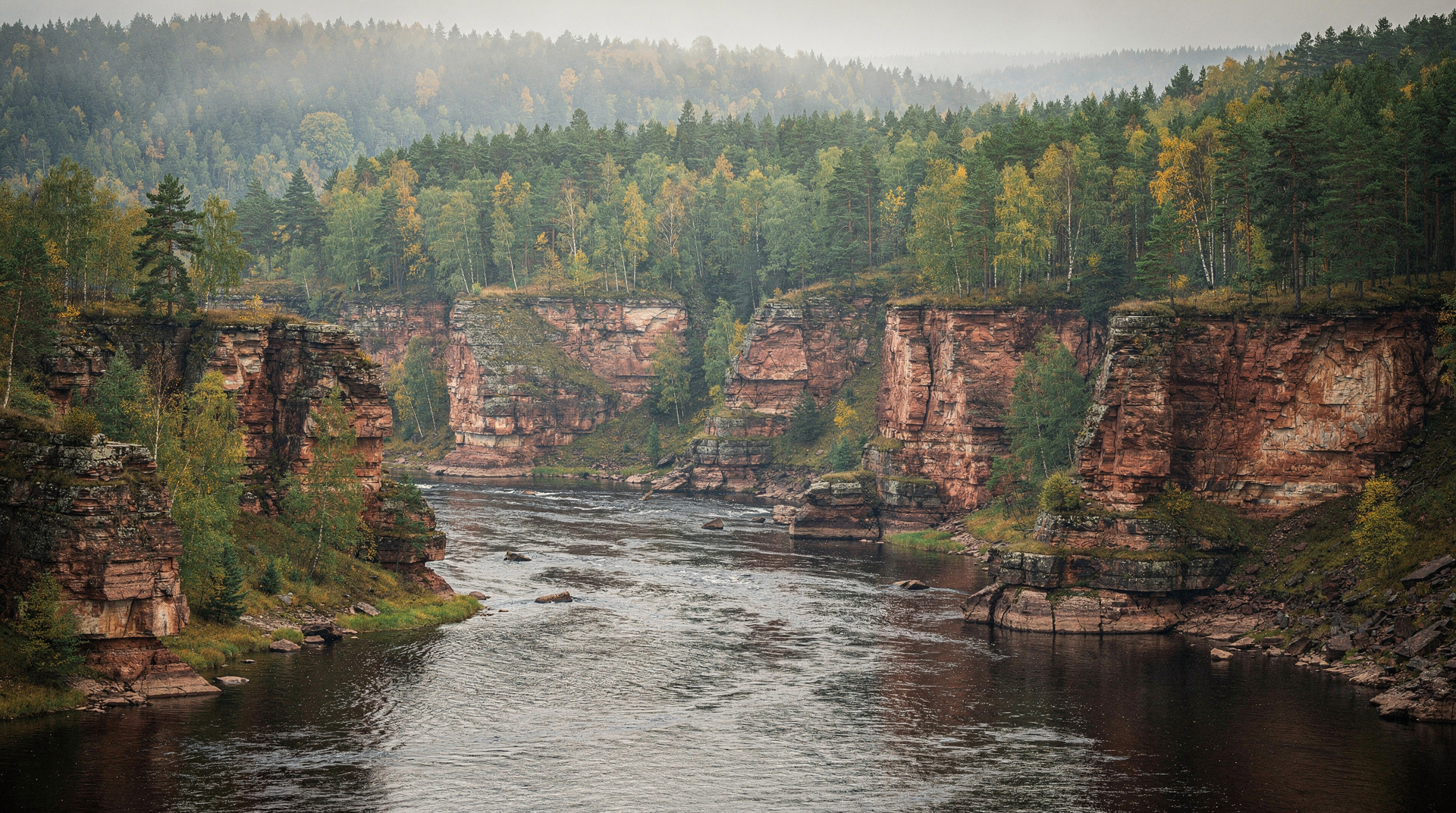
Ķemeri is one of several nature-focused day trips from Riga, and it is worth weighing against the alternatives. Compared to the Gauja National Park, Ķemeri is flatter, more accessible (no hiking fitness required for the boardwalk), and more visually alien — the bog looks like nowhere else in Latvia, where Gauja offers forested river valleys, sandstone cliffs and castle ruins instead.
For a full comparison of all the nature and green-space options closer to the city centre, see Riga parks and green spaces, and for a season-by-season view of how Ķemeri fits the wider shoulder-season calendar, see Riga in spring and autumn shoulder season and Riga weather month by month.
Families weighing the boardwalk against other options should also check Riga with kids — the flat, pram-accessible trail makes Ķemeri one of the easier nature outings with young children, more so than the hiking trails at Sigulda.
Seasonal snapshot
| Season | Highlight | Trade-off |
|---|---|---|
| Spring (Apr–May) | Cottongrass bloom, spring migrants | Mosquitoes begin in May |
| Summer (Jun–Aug) | Warmest, easiest logistics | Least dramatic colour, peak mosquitoes |
| Autumn (Sep–Oct) | Burgundy sphagnum, crane migration | Shorter daylight |
| Winter (Nov–Mar) | Minimalist snow landscape | Slippery boardwalk, very limited daylight |