Baltic Sea beaches near Riga — the honest guide
The Soul of the Baltic Sea: Jūrmala half-day tour
Duration: 4 hours
- Hotel pickup
What is the best beach near Riga?
Jūrmala's Majori and Dubulti beaches are the most accessible (20 min by train, €2). For fewer crowds, Saulkrasti (north of Riga, 40 min by train) is excellent. Water temperature peaks at 18–20°C in July–August — cold by Mediterranean standards but swimmable.
Jūrmala is the easiest beach day trip from Riga, but it isn’t the only option — and it isn’t a Mediterranean beach experience. Here’s the practical picture first.
| Where | Jūrmala, 25 km west (or Saulkrasti, 40 km north) |
| Cost | €2–3 each way by train |
| Time needed | Half day to full day |
| Getting there | Train from Riga Central, 20–40 min |
| Best time | Late July–mid-August for swimming; September for atmosphere |
Baltic beaches near Riga — setting honest expectations first
The Baltic Sea beaches accessible from Riga are among the most beautiful in Northern Europe, and they require a specific mindset to fully appreciate. The water temperature peaks at 18–20°C in late July and early August. The wind off the sea is almost always present. The sand is fine white quartz, the pine forests behind the beach dunes smell extraordinary, and the light in summer — particularly in the long evenings — has a quality that Mediterranean beaches simply do not have.
They are not Mediterranean beaches. If your benchmark is the Algarve or the Croatian coast, these beaches will disappoint on a temperature basis. If your benchmark is the North Sea coast of Denmark or the beaches of southern Sweden — to which they are genuinely comparable — you will find them excellent. Many visitors to Riga in July and August rate the Jūrmala beach day as the highlight of their trip, which should tell you something.
Jūrmala — the main beach resort
Jūrmala (the name simply means “seashore” in Latvian) is a 26 km strip of pine forest, sand dunes, and wooden summer villas stretching west from Riga along the Gulf of Rīga. It is the premier beach resort of the Baltic states — comparable in historical status to the Estonian resort Pärnu or the Lithuanian resort Palanga, but with more architectural heritage and better transport connections.
The main beach access points:
Majori: The de facto center of Jūrmala, with the main pedestrian street (Jomas iela), most restaurants and cafés, and a supervised beach with lifeguard towers. The beach here is approximately 200 m wide and well maintained. 25 minutes by train from Riga (Majori station), €2.
Dubulti: One stop west of Majori, quieter, with better access to the undeveloped pine forest behind the dunes. The beach is less crowded than Majori on summer weekends but slightly less convenient for food and facilities.
Jūrmala town (Jūrmala proper): The western sections, accessed from Dzintari, Lielupe, and Kauguri stations, are wider and less crowded. The further west you go, the fewer facilities and the more natural the beach environment.
The Soul of the Baltic Sea: Jūrmala half-day tour — €65, 4 hoursGetting to Jūrmala
By train: Pasažieru Vilciens runs 2–3 trains per hour to Majori from Riga Central Station during summer. Journey time 20–25 minutes. Price: €2 each way. Buy at the station window or at automatic machines. This is far the easiest option for a single day trip.
By car: 30–40 minutes on the A10 motorway from Riga. Note: there is a road toll to enter Jūrmala in summer (June 1–August 31, approximately €2 per vehicle per day). Parking near Majori is limited on summer weekends — arrive before 10:00 or use the parking areas at the station and walk.
By bike: The Riga–Jūrmala cycle path follows the Lielupe riverbank for approximately 25 km. It is a pleasant ride (2–3 hours) on a dedicated path through forest. See Riga by electric bike for rental options.
Saulkrasti — the quieter alternative north of Riga
Saulkrasti (“sunny cliffs”) is a small coastal town 40 km north of Riga on the Gulf of Rīga coast. Unlike Jūrmala, which is on the sheltered inner bay, Saulkrasti faces slightly more open water and its beach has a more rugged, undeveloped character. The White Dune (Baltā kāpa), a 17 m high sand dune behind the beach, is the main natural feature.
Getting there: Pasažieru Vilciens from Riga, approximately 40 minutes, €3. Trains run every 1–2 hours. Saulkrasti has a good beach café and a cycling path connection to the Gauja National Park area (for the ambitious).
Best for: visitors who find Jūrmala too developed or crowded, families wanting a relaxed beach day with fewer commercial distractions.
What to do on a Jūrmala beach day
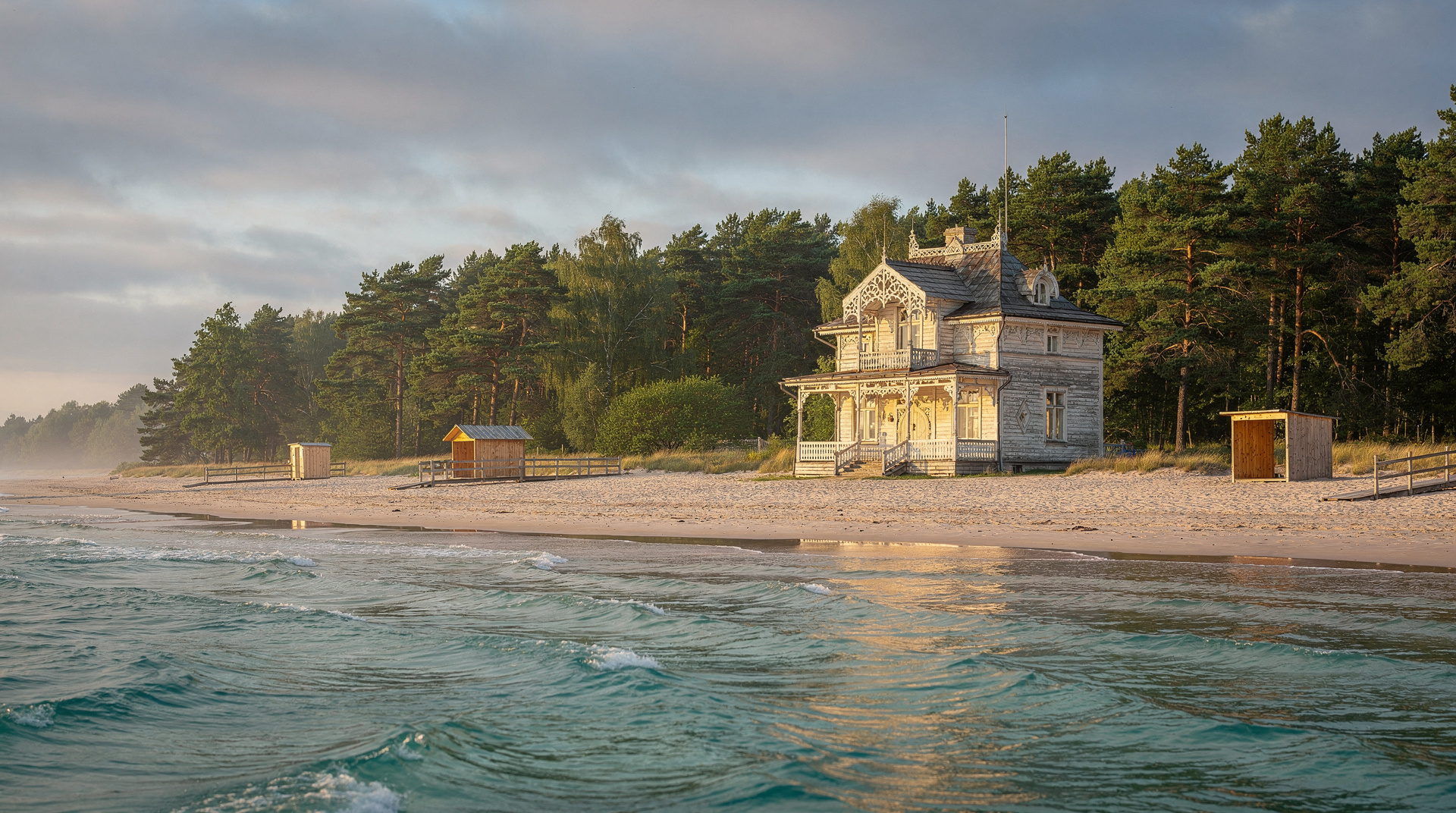
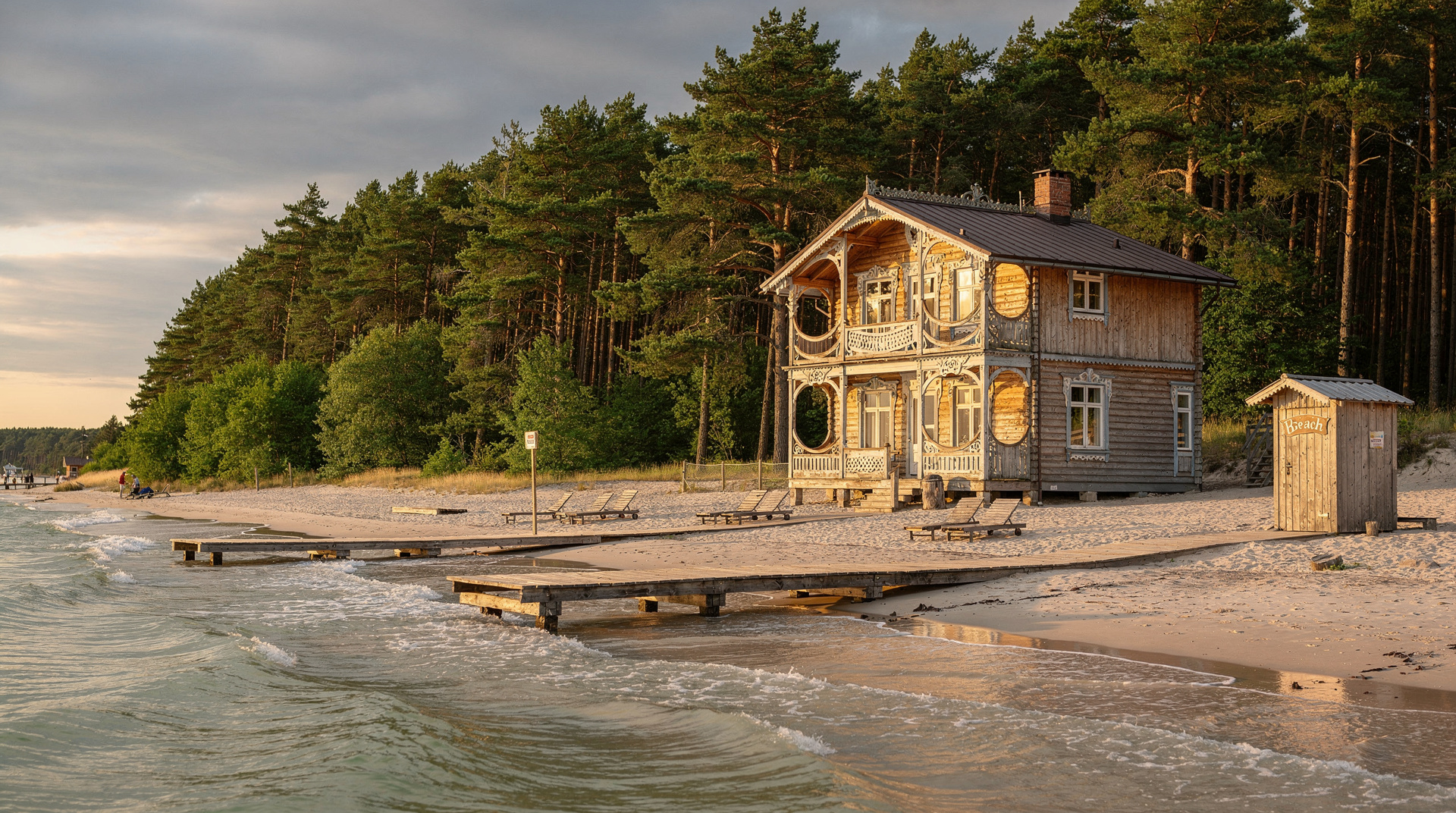
Jomas iela: The pedestrian main street of Majori is lined with wooden Art Nouveau and historicist villas, many converted to restaurants, cafés, boutiques, and rental accommodation. Walking this street is genuinely pleasant regardless of weather. The architecture is a specific genre — Latvian summer villa, highly ornamental — that does not exist in this concentration anywhere else.
Pine forest walks: The forest between the beach dunes and Jomas iela is a specific Jūrmala experience. Trails wind through old Scots pines with unusually twisted trunks; the resin smell in warm weather is extraordinary. The Dzintari Forest Park (officially Dzintari Concert Hall park) has maintained paths and benches.
Swimming: In July–August, the supervised beach sections at Majori are actively used. Water temperature 17–20°C. The water is very shallow for some distance from shore (gentle slope) which makes it safer for children than many sea beaches. Jellyfish appear occasionally in August; not dangerous, but uncomfortable to swim through.
Horse riding: One of the more unusual Jūrmala experiences — horse riding tours along the beach are available from operators near the Lielupe section.
Riga: horse riding tour along the Baltic Sea beach — €85, 2 hoursThe wind problem — honest assessment
The Gulf of Rīga coast has a persistent wind issue. The prevailing southwest winds push along the beach approximately 50% of summer days. This is not dangerous (the Baltic is a shallow sea with modest wave heights) but it makes sitting on the beach less comfortable than a warm, sheltered Mediterranean beach. Wind speeds are typically 3–5 Beaufort (fresh breeze), occasionally stronger.
The practical impact: on windy days, the pine forests behind the dunes become more appealing than the exposed beach. Jūrmala remains worthwhile in wind conditions — the restaurants on Jomas iela, the architectural walks, and the forest paths are all enjoyable — but the swimming experience is diminished.
Checking the forecast the evening before a planned Jūrmala day is strongly recommended. The two-hour window after forecast improvement is often the best swimming of the day.
Combining Jūrmala with Ķemeri
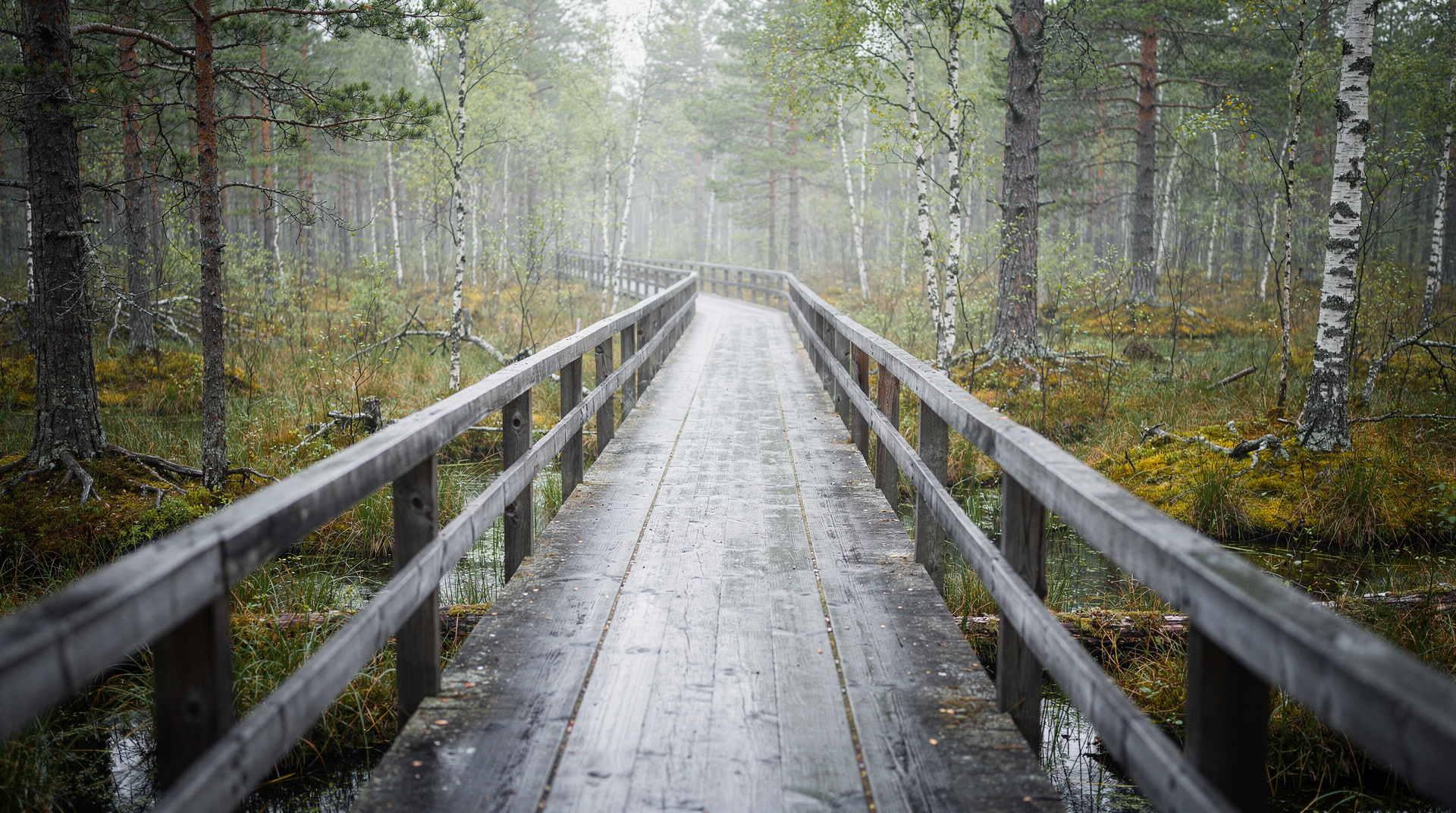
The natural combination: morning at the bog boardwalk in Ķemeri National Park (3–4 hours), train or Bolt to Jūrmala for lunch and afternoon beach. Ķemeri is one stop west of Majori on the same train line. This 8-hour day circuit is one of the best-value experiences accessible from Riga.
From Riga: Ķemeri bog boardwalk and seaside Jūrmala — €89, 6 hoursPractical summary
| Beach | Distance from Riga | Transport | Best for |
|---|---|---|---|
| Majori (Jūrmala) | 25 km | Train 25 min, €2 | First visit, facilities, architecture |
| Dubulti (Jūrmala) | 27 km | Train 27 min, €2 | Slightly quieter, forest access |
| Saulkrasti | 40 km | Train 40 min, €3 | Undeveloped, nature-focused |
| Lielupe (Jūrmala) | 35 km | Train 35 min, €2 | Naturist area, wider beach |
Best swimming months: July and August. Best overall beach experience: late July to mid-August on a calm, warm day. Best atmosphere: warm September evenings when the summer crowds have gone and the light turns golden at 19:00.
Jūrmala’s wooden architecture — why it matters beyond the beach
Jūrmala is not just a beach resort — it is one of the most significant collections of wooden resort architecture in Northern Europe. The wooden villa tradition of Jūrmala developed from the 1870s onward as wealthy Riga families, Russian aristocracy, and the upper-middle class of the Russian Empire built summer residences along the pine-forest strip. By 1914, the area had over 3,000 summer houses.
The architecture that survives (approximately 4,000 wooden buildings remain, of which several hundred are listed heritage structures) ranges from modest wooden cottages to elaborate late 19th-century villas in the Romantic historicist and early Art Nouveau styles. The intersection of Jomas iela and the side streets that run between it and the beach is the best area for architectural exploration.
What makes Jūrmala’s wooden architecture distinctive: the combination of Latvian folk carving traditions (decorative woodwork on eaves, balconies, and window frames) with the imported architectural styles of the period produces buildings that are neither purely vernacular nor purely cosmopolitan — they are specifically Baltic German / Russian imperial border-culture buildings, a style found nowhere else.
A slow walk through the residential streets parallel to Jomas iela (Kāpu iela, Turaidas iela, Bulduri section) takes 1.5–2 hours and is a worthwhile complement to the beach visit.
The Jūrmala Sound Concert Hall
One of the unexpected highlights of a Jūrmala visit: the Dzintari Concert Hall (Dzintaru Koncertzāle), Turaidas iela 1, is an open-air venue surrounded by pine forest that hosts classical concerts, jazz performances, and pop concerts throughout the summer season (June–September). The acoustic combination of pine canopy and wooden pavilion is unusual, and the experience of attending a concert in a forest on a warm summer evening is genuinely memorable.
Programs are posted at dzintarikoncertzale.lv. Ticket prices range from €15–50 depending on the performance. The venue is accessible on foot from Dzintari train station (one stop from Majori).
Baltic amber — buying it correctly in Jūrmala
The Gulf of Rīga coast is one of the main amber-producing areas of the Baltic Sea. Jūrmala’s shops sell amber in every form from raw pieces to worked jewelry, and the quality and price vary enormously. Quick guide:
Raw amber (unworked stones): The most authentic option. Small pieces from €2–5, larger pieces proportionally more. Available at the Dzintari beach vendor stalls and the artisan market at Jomas iela.
Worked amber jewelry: Quality ranges from tourist-shop plastic-like pieces (test: real amber floats in salt water; fakes sink) to fine craftsmanship from Latvian designers. The Latvian Amber Museum in Jūrmala provides authenticity context.
The honest test: Rub the piece between your fingers for 20 seconds and smell it. Real Baltic amber releases a faint resinous pine-and-vanilla smell. Copal (young resin sold as amber) smells more acidic. Plastic fakes have no smell. This is the most reliable field test.
Renting a bicycle in Jūrmala
Jūrmala is excellently suited to cycling. The town extends 26 km along the coast, with a dedicated cycling path running along the beach road and a separate path through the pine forest. Bicycle rental is available from several operators near Majori and Dubulti stations, typically €8–12 for a standard bike or €20–25 for an e-bike per day.
The Jūrmala cycling path connects to the Riga–Jūrmala cycling route (described in the Riga by electric bike guide), making it possible to cycle from Riga to the furthest sections of Jūrmala and back in a day on an e-bike. The path is flat throughout and passes through continuously pleasant pine forest.
Beach facilities by section
| Section | Lifeguard | Facilities | Distance from Majori |
|---|---|---|---|
| Majori main beach | Yes (summer) | Full | Central |
| Dubulti | Seasonal | Café | 2 km west |
| Jūrmala central | Seasonal | Limited | 4 km west |
| Lielupe | No | Minimal | 8 km west |
| Kauguri | No | None | 12 km west |
The further west you go, the quieter, wider, and less developed the beach. Families with young children should stay within the supervised sections (Majori, Dubulti). Independent adults who want solitude and are comfortable swimming unsupervised will find the Lielupe–Kauguri sections more appealing.
Planning a beach day around the rest of your trip
A Jūrmala day works well slotted into a longer Riga stay rather than as a standalone trip. See our Riga 3-day itinerary with Jūrmala for how to build the beach day around Old Town and Art Nouveau sightseeing, or our complete Riga with kids guide if you’re travelling with children and want the full family-planning picture, including which beach sections suit younger kids.
For general orientation on when to visit, see best time to visit Riga and Riga weather month by month — both help set expectations for water temperature and rainfall risk beyond the beach-specific numbers above. If you’re deciding between the train and cycling, our Riga by electric bike guide covers the full coastal cycling route in more depth.