Turaida
A medieval red-brick castle above the Gauja valley, a Liv folk song garden and the legend of the Rose of Turaida — best combined with Sigulda.
From Riga: Cēsis, Sigulda and Turaida Castle tour
Duration: 10 hours
- Hotel pickup
- Free cancellation
- Best seller
Quick facts
- Distance from Riga
- ~55 km northeast
- Nearest train station
- Sigulda (2 km away)
- Castle entry
- ~€5
- Tower height
- 38 m (climbable)
- How to get there
- Walk from Sigulda, bus or taxi
The red castle that defines Latvia’s postcard image
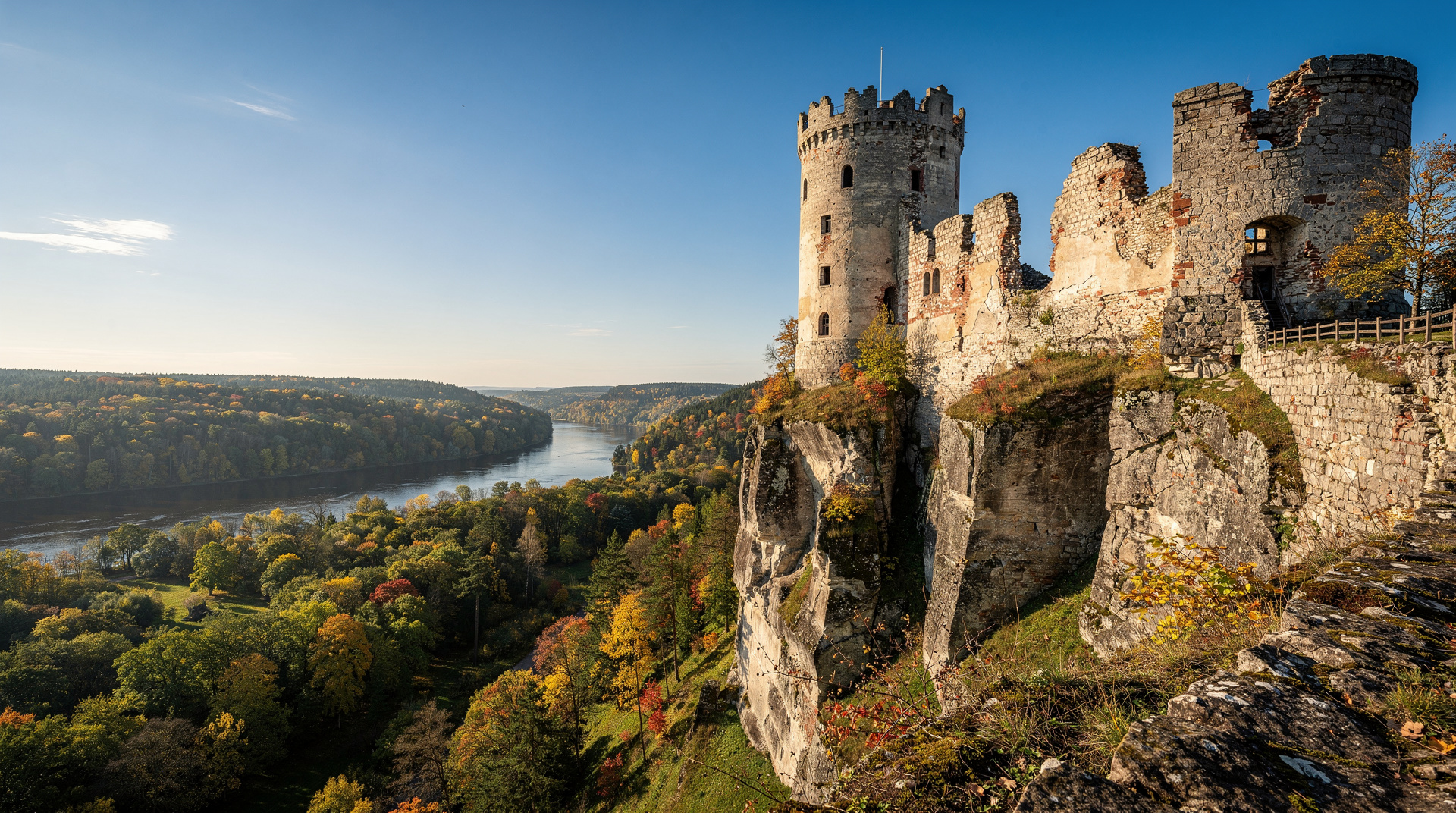
Turaida Castle is the photograph that ends up on every Latvian tourism brochure: a round red-brick tower rising above the Gauja valley forest, the autumn trees blazing orange and gold around it, the sandstone cliffs visible in the distance. The reality is not a letdown. The castle is photogenic at every season and the Museum Reserve surrounding it tells a genuinely interesting story about the Liv people — the indigenous Baltic-Finnic inhabitants of the region who spoke a language now essentially extinct — and about medieval life in the Gauja valley.
Turaida is best treated as a half-day extension to a Sigulda visit rather than a standalone destination. The two sites together, along with the Gūtmanis Cave walk between them, make a full and satisfying day from Riga. The walk from Gūtmanis Cave (on the Gauja riverbank below Sigulda) to Turaida takes about 30–40 minutes through riverside forest and up a well-marked path to the castle. It is one of the more pleasant short walks in Latvia.
| Where | Gauja valley, ~55 km northeast of Riga, 2 km from Sigulda |
| Cost | around €5 entry to the Museum Reserve |
| Time needed | half day (1.5–2 hrs at the castle; 4–5 hrs combined with Sigulda) |
| Getting there | Train to Sigulda (~1 hr, ~€3), then walk or taxi to Turaida |
| Best time | May–October; September–October for autumn colour |
For the wider region this sits in, see the Vidzeme regional guide and the Gauja National Park page.
The castle’s history is long and layered. It was originally built in 1214 on the orders of Albert von Buxhoeveden, the Archbishop of Riga, on a site previously occupied by a Liv tribal hill fort. The Livonian Church and the Livonian Order were frequently in conflict throughout the medieval period, and the Gauja valley — with Turaida on the Archbishop’s side and Sigulda on the Order’s side — was the physical manifestation of that competition. The castle served as the Archbishop’s administrative centre for the Gauja valley lands and was one of the most important sites in the Livonian political landscape for three centuries.
The castle fell into ruin after Swedish and later Russian control in the 17th and 18th centuries. The restoration process that transformed it from a heap of rubble into a visitable site began in the Soviet period and continued after independence, taking several decades and considerable archaeological research to achieve the current state. What you see today is a careful balance between preservation of original medieval masonry and restoration of sections that were reconstructed based on archaeological evidence.
The Museum Reserve surrounding the castle was established in 1975 and covers a broader area than the castle itself. The reserve encompasses the surrounding forest, the Turaida village area, several archaeological sites relating to Liv settlement in the valley, and the folk song garden (Dainas Hill) that has particular cultural significance for Latvian heritage.
The Liv people — the indigenous Baltic-Finnic-speaking inhabitants of the coastal and riverine areas of what is now Latvia and Estonia — are central to the Turaida story. The Livs gave their name to Livonia (the historic region covering modern Latvia and Estonia), and the Gauja valley was part of their traditional territory. The Livonian language, closely related to Estonian and Finnish, essentially ceased to be spoken as a native tongue during the 20th century — the last native speaker died in 2013. The Turaida Museum Reserve’s exhibitions on Liv culture and material history are among the most thorough available anywhere.
Understanding this Liv layer changes how the whole valley reads. The Gauja gorge was not empty wilderness before the German crusaders arrived — it was inhabited, farmed and defended by a distinct people whose language and customs have almost entirely vanished from living memory. Museum panels trace this from archaeological finds through to the 20th-century revival efforts that recorded the last speakers before the language died out. For visitors who want deeper regional context beyond Turaida itself, the Gauja National Park guide covers more of the valley’s natural and cultural history.
From Riga: Cēsis, Sigulda and Turaida Castle tour
- Hotel pickup
- Free cancellation
- Best seller
What to see and do at Turaida
Turaida Castle and the main tower
The castle was originally built in 1214 on the orders of the Archbishop of Riga and was the administrative centre of the Livonian Church’s holdings in the Gauja valley. Substantial portions survive: the main round tower (38 m, climbable via wooden stairs for valley views), two secondary towers, a gatehouse, and an exhibition space in the restored building showing archaeological finds and castle history.
Entry is approximately €5 for the Museum Reserve. This includes access to the grounds, exhibitions and the tower. Allow 1.5–2 hours to see the castle, exhibitions and the folk song garden at a relaxed pace.
The Rose of Turaida legend
Turaida has its own founding legend: Maija, the “Rose of Turaida,” an orphan girl raised by the castle steward in the 17th century who allegedly sacrificed herself to preserve her honour. A grave believed to be hers lies in the castle grounds and remains a site of quiet pilgrimage. Whether the legend has any historical basis is disputed, but it has been kept alive through Latvian folk tradition and is woven through the museum exhibitions.
Dainas Hill and the folk song garden
Adjacent to the castle, Dainas (Folk Songs) Hill is a gentle landscaped garden with sculptured stones inscribed with Latvian dainas — the short four-line folk poems that form one of the largest bodies of oral folk poetry in the world. The UNESCO recognition of Latvian dainas in 2003 has given this part of the Museum Reserve particular significance. It is peaceful, shaded and easy to walk in 20–30 minutes.
Turaida Church
A small 18th-century Lutheran wooden church stands near the castle — one of the oldest surviving wooden churches in Latvia. Open to visitors; simple interior but historically interesting.
How Turaida compares to Sigulda’s own castles
Visitors sometimes arrive expecting Turaida and Sigulda Medieval Castle to be similar — they are not. Sigulda’s castle ruins are free to enter and consist of exposed stonework with limited reconstruction, giving a rawer, more atmospheric ruin experience. Turaida, by contrast, is substantially restored and run as a proper museum with a paid ticket, a climbable tower, and curated exhibitions. If you only have time for one castle experience in the valley, Turaida gives you more to actually see and climb; Sigulda’s ruins give you more of a genuine medieval-ruin feeling for free.
The walk from Gūtmanis Cave
The most rewarding approach to Turaida is on foot from Gūtmanis Cave on the Gauja riverbank. The path follows the river briefly then climbs through mixed forest to the castle. Distance: approximately 2 km from the cave, 5 km from Sigulda station. The path is well-marked and moderate — no technical difficulty but some uphill sections.
How to get to Turaida from Riga
Turaida has no direct train connection. The practical options are:
Via Sigulda (recommended): Take the Pasažieru Vilciens train to Sigulda (approximately 1 hour, ~€3), then walk 5–6 km via Gūtmanis Cave or take the bus/taxi from Sigulda centre to Turaida (approximately 3 km by road, bus runs several times daily in summer, taxi ~€8–10). Most visitors who combine Sigulda and Turaida walk down to Gūtmanis Cave from Sigulda castle, walk along the river to Turaida, and then return to Sigulda by bus or taxi.
By guided tour: A day tour from Riga that covers Sigulda, Turaida and often Cēsis is the easiest option for seeing all three sites without managing transport logistics independently.
Riga: private Sigulda, Turaida and Gauja National Park tour
- Private group
- Customizable
Where to eat near Turaida
There is a café near the castle entrance serving hot drinks, soup and basic snacks — useful for a break but not a full meal. For a proper lunch or dinner, Sigulda town (2–3 km) has better options. Aparjods restaurant in Sigulda is the area’s most reliable choice for Latvian cuisine (mains €10–16). Packing a picnic to eat in the folk song garden or on the castle grounds is a very good option in good weather.
Where to stay
Turaida is a half-day stop within a Sigulda day trip from Riga. There is no accommodation within the Museum Reserve itself. If staying overnight in the area, Sigulda has guesthouses and small hotels; see the Sigulda page for options. Most visitors base themselves in Riga — the Riga Old Town vs Art Nouveau accommodation guide helps decide which neighbourhood to book for easy access to the Sigulda train.
Honest tips for Turaida
Turaida entry is separate from Sigulda castle. They are two distinct sites with separate entry fees. If you pay at Sigulda’s Old Castle ruins (which are free), that does not cover Turaida. Budget €5 per person for Turaida Museum Reserve.
The walk from Sigulda to Gūtmanis Cave and on to Turaida is one-way. You will need to return to Sigulda by bus, taxi or the same route on foot. Plan your return in advance, especially if catching a specific train back to Riga.
Autumn is peak season for photography. September–October is when the castle tower looks best — the surrounding forest turns orange and gold, the sky is often clear, and the low autumn light on the red brick is exceptional. Expect more visitors than the spring.
Some online guides describe a viewpoint from the Sigulda side looking across to Turaida. This is real and worth finding: the lookout point near the Sigulda cable car gives a valley-wide view with Turaida tower visible on the opposite slope. This is a free viewpoint and does not require entering either castle.
Planning your Turaida visit: practical details
Ticket prices and opening hours
The Turaida Museum Reserve entry fee is approximately €5 for adults (€3 for students and seniors). This covers the castle grounds, the tower climb, the exhibition spaces and the folk song garden. The museum reserve is open daily in summer (9 am to 8 pm); hours reduce to 10 am to 5 pm in winter, and some sections close on Mondays. Guided tours in English can be booked in advance and typically run about 1.5 hours covering the key points of the castle history and the Liv culture.
Photography within the castle grounds is free and unrestricted. The tower interior is narrow and the stairs are steep — people with claustrophobia may prefer to view the exterior only. The garden area is wheelchair-accessible; the tower climb is not.
English-language signage throughout the Museum Reserve is thorough — better than at many smaller Latvian sites — so a guided tour is a nice-to-have rather than a necessity if you are comfortable reading exhibition panels at your own pace. Families with young children should budget extra time: the grounds are large enough that children want to run around the courtyard and folk song garden rather than move briskly between exhibits.
Combining Turaida with other activities
The area around Turaida offers several other points of interest for visitors who want a more complete half-day:
Sigulda Bobsleigh Track: If you are visiting in summer (April to September), the bobsleigh track at Sigulda is approximately 2 km from Turaida by road. Many visitors do Turaida in the morning and the bobsleigh in the afternoon — or vice versa. See the Sigulda page for booking details and prices.
Gauja River kayaking: Starting points for kayak rental on the Gauja River are located near the Turaida area. Half-day kayak sections down the river give views of the sandstone cliffs and forested banks that are not accessible from any path.
Sigulda cable car and Krimulda: The cable car crossing connects to Krimulda on the north bank of the valley. The Krimulda castle ruins (free, 10 minutes from the cable car landing) and the rehabilitated Soviet sanatorium nearby make an interesting detour.
Aerodium wind tunnel: For a different kind of adrenaline than the bobsleigh, the Aerodium wind tunnel experience sits close to central Sigulda and runs in summer season only. Best paired with a Turaida morning and a Sigulda-town lunch.
Turaida by season
| Season | What to expect |
|---|---|
| May–June | Green valley, fewer crowds, long daylight |
| July–August | Peak season, warmest weather, busiest paths |
| September–October | Best photography — autumn colour on the valley slopes |
| November–March | Reduced hours, some sections close on Mondays, quiet and atmospheric |
Autumn in the Turaida valley
The valley at Turaida in September–October is one of the most photographed landscapes in Latvia, and deservedly so. The deciduous trees that cover the valley slopes below the castle turn from green through yellow to deep orange and russet over about three weeks. The timing varies by year and depends on temperature, but typically peaks in the first two weeks of October. The combination of the red-brick castle tower, the autumn forest below, and the sandstone cliffs visible across the valley on clear days produces the classic Latvian autumn photograph.
Early morning in this period — before 9 am on a windless day — is best for mist in the valley hollows. A camera with good low-light capability is worth bringing; the autumn light in the valley is often indirect and golden rather than bright, and the mist refracts it in ways that can be dramatically beautiful.
The Turaida Rose and Latvian folk culture
The legend of the Rose of Turaida (Turaidas Roze) has had a cultural life well beyond its possible historical origins. The story of Maija — an orphan raised at Turaida Castle who died rather than betray her betrothed — was developed into a symbol of Latvian resilience and innocence in the 19th century during the Latvian national awakening. The Latvian opera “Maija un Paija” and several literary works have drawn on the legend. The grave near the castle entrance is still decorated with flowers by visitors, not as a formal religious act but as a spontaneous expression of the legend’s continued emotional resonance.
Whether the historical Maija existed or not is less important than what the legend communicates: the Turaida valley as a site of Latvian belonging, of a people connected to their land. For visitors interested in understanding Latvian identity rather than just seeing castles, this dimension of the Turaida visit adds real depth.
Frequently asked questions about Turaida
How do I get from Sigulda to Turaida?
Walk (5 km via Gūtmanis Cave, approximately 1.5 hours), take the local bus from Sigulda centre (runs several times daily in summer, check times locally), or take a taxi (€8–10, approximately 10 minutes). The walk is the recommended option for anyone who wants to see the valley properly.
How long should I spend at Turaida?
Allow 1.5–2 hours for the castle, tower, exhibitions and folk song garden at a relaxed pace. Combined with the walk from Gūtmanis Cave, the entire Sigulda-Gūtmanis-Turaida circuit takes 4–5 hours.
Is Turaida suitable for children?
Yes. The castle tower is climbable and children enjoy it. The grounds are spacious. The folk story of the Rose of Turaida can be engaging for older children. The walk from Sigulda is suitable for children who can manage moderate terrain; there are some steep sections.
What is the best combined day trip: Sigulda + Turaida or Sigulda + Cēsis?
Both are excellent. Sigulda + Turaida focuses on the valley landscape, cave and castle experience. Sigulda + Cēsis adds a medieval market town and a second castle but requires more travel. For a single day trip focused on scenery and walking, Sigulda + Turaida is the tighter choice. See the Sigulda vs Cēsis comparison guide for a detailed breakdown.
Is the Turaida tower worth climbing?
Yes — particularly in autumn when the forest canopy below the tower turns to colour. The tower is 38 m; the stairs are steep and the headroom at some points is low. People with limited mobility should be aware it is not accessible.
What is the difference between Turaida Museum Reserve and Turaida Castle?
The Museum Reserve is the broader protected area encompassing the castle, the folk song garden (Dainas Hill), the church, archaeological sites and the surrounding forest. The castle is the main attraction within the reserve. When you pay the entry fee (~€5), you gain access to all parts of the reserve, including the tower, the exhibitions and the garden. “Turaida Castle” and “Turaida Museum Reserve” are often used interchangeably in tourist literature, but strictly speaking the reserve is the larger entity.
Can I combine Turaida with the Sigulda bobsleigh in one day?
Yes. The practical route: walk from Sigulda station to Gūtmanis Cave (15 minutes downhill), walk along the river to Turaida (30–40 minutes), spend 2 hours at the castle, take the bus back from Turaida to Sigulda town (runs several times daily in summer), then go to the bobsleigh track (10-minute walk from town). Allow 6–7 hours total for this combination. Book the bobsleigh in advance — summer slots sell out on weekends. This is one of the most action-packed single days available from Riga without a car.
What should I read before visiting Turaida?
For Latvian history: Andrejs Plakans’ “A Concise History of the Baltic States” provides accessible context for the medieval Livonian period and the Liv people’s role in Baltic history. For the Rose of Turaida legend specifically, the Turaida Museum Reserve website (turaida-muzejs.lv) has an English-language summary of the legend and its cultural significance. The museum exhibitions themselves are well-written in English and cover both the castle archaeology and the Liv culture in depth — reading the exhibition panels carefully replaces most of what a pre-visit reading would provide.
Is Turaida worth it if I’ve already seen Sigulda’s castle ruins?
Yes, they are different enough to justify both. Sigulda’s ruins are free, raw and unreconstructed; Turaida is a paid, restored museum experience with a climbable tower and curated exhibitions on Liv culture. See the Sigulda medieval castle guide for what to expect there before deciding how much time to allocate to each.
Can I visit Turaida without visiting Sigulda?
Technically yes by taxi directly from Riga, but it is not the efficient way to do it. The train only goes to Sigulda, and most of the value of the trip comes from the walk through the valley via Gūtmanis Cave. Treat Turaida and Sigulda as one combined day rather than trying to isolate Turaida on its own.
Top experiences
Bookable activities with verified prices and instant confirmation on GetYourGuide.