Sigulda vs Cēsis: which day trip from Riga should you choose?
From Riga: Cēsis, Sigulda and Turaida Castle tour
Duration: 10 hours
- Hotel pickup
- Free cancellation
- Best seller
Should I take a day trip to Sigulda or Cēsis from Riga?
Sigulda is the better choice for most visitors: it has more to see (castle ruins, Gūtmaņala grotto, Aerodium, summer bobsleigh), better infrastructure, and is 1 hour from Riga by train (under €4). Cēsis is quieter, more medieval in atmosphere, and better for slow walkers and those who want to avoid crowds. Ideally, combine both in one day — the train stops at both (Cēsis is 1.5 hours from Riga, under €4).
Two very different versions of the same day trip
Sigulda and Cēsis are 20 minutes apart by train, both on the same line from Riga, and both within Gauja National Park. They are almost always discussed together — and the combined day trip that covers both is the most popular excursion from Riga.
But they are very different experiences, and if you have to choose just one, the choice matters. This guide explains what each is, who should choose each, and how to combine them if your schedule allows.
| Where | Both on the Riga–Gauja train line, 50–70 km northeast of Riga |
| Cost | Train under €4 (Sigulda) or under €4 (Cēsis); combined guided tour around €95 |
| Time needed | Half day for one town; full day (8–9 hrs) to combine both |
| Getting there | Pasažieru Vilciens train from Riga Central Station |
| Best time | Late September–early October for foliage; weekdays for smaller crowds |
Sigulda: more activity, more variety
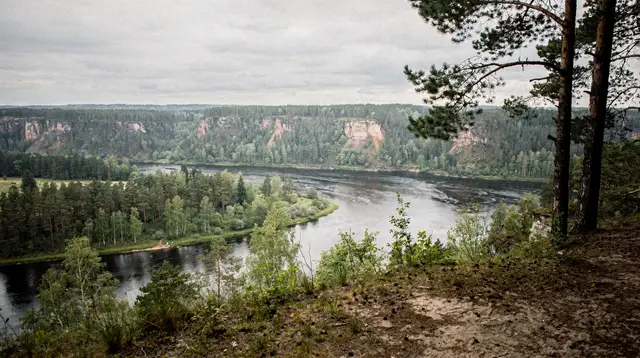
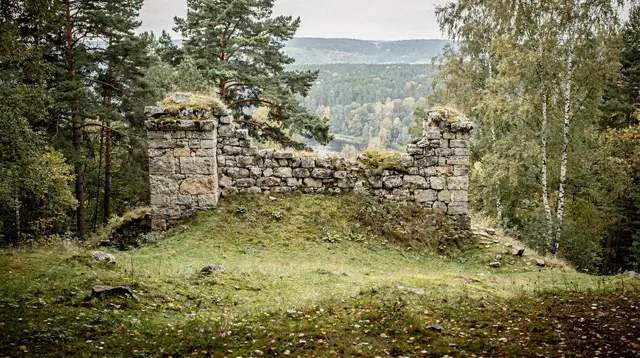
Sigulda is the adrenaline-outdoor end of the Gauja experience. In a single day from Riga you can walk from the train station to the Sigulda Medieval Castle ruins (a 10-minute walk), continue to the New Sigulda Castle (19th-century manor, now used as a conference centre — exterior of interest), take the cable car across the Gauja valley (seasonal, extraordinary views; current fares and hours on the official Sigulda tourism website), walk down to the river at Gūtmaņala grotto (the largest cave in the Baltics, 19m high, with love inscriptions carved into sandstone since the 13th century), and then cross to Turaida Castle (a 2 km walk or short taxi ride through the valley floor).
If that isn’t enough, the summer bobsleigh track at the Olympic venue (€30 per adult, April–September depending on weather) and the Aerodium outdoor wind tunnel (price and season: see aerodium.lv) are both within reach.
Sigulda’s limitation: it has become popular, particularly in summer. The cable car queues can be long on weekends; the Gūtmaņala grotto path is busy with tour groups. Going on a weekday, or choosing an organised tour with a guide who navigates the timing, makes a difference.
For a comprehensive day, the shared day trip to Sigulda from Riga is a simple way to see the town with the logistics handled. For the complete Cēsis-Sigulda-Turaida circuit, the Cēsis, Sigulda and Turaida Castle group tour (€95) is the most popular organised option and highly rated.
Cēsis: medieval atmosphere, less rushed
Cēsis (pronounced “TSEH-sis”) has a medieval character that feels more organic and less tourist-managed than Sigulda. The town centre around Vienības laukums has genuine 18th–19th century architectural character, independent cafes, and a pace that’s noticeably quieter than Sigulda.
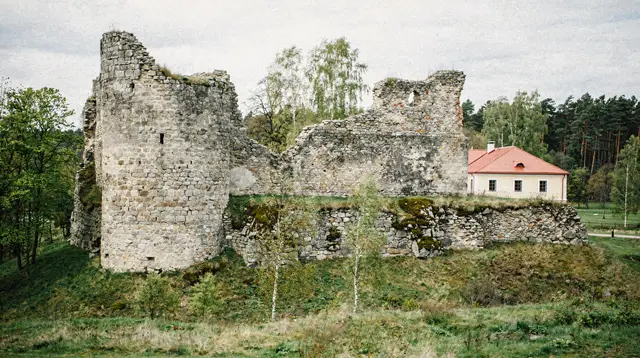
The drawcard is Cēsis Castle — not one building but a complex: the extensive ruins of the Livonian Order castle (13th–16th century) and the adjacent New Castle (18th century manor) which houses the Cēsis History and Art Museum. The ruins are explored with candle lanterns rather than electric lighting, which turns the visit into something memorably atmospheric.
The Cēsis historic centre is small enough that you can cover the main sights in 2–3 hours, leaving time for the castle, a walk along the medieval town walls section, and coffee at Ēdnīca in the Old Town.
For a guided version, the trip from Riga to Turaida, Sigulda and Cēsis Castle provides context that enriches the castle visit.
Head-to-head: which should you choose?
| Factor | Sigulda | Cēsis |
|---|---|---|
| Travel time from Riga | 1 hour | 1.5–2 hours |
| Train cost | €3 | under €4 |
| Activity variety | High (castle, cave, cable car, bobsleigh, Aerodium) | Lower (castle, Old Town, hiking) |
| Crowds (summer) | Moderate to high | Low to moderate |
| Medieval atmosphere | Good (castle ruins, valley views) | Excellent (intact Old Town, candlelit castle) |
| Hiking access | Extensive (Gauja trails) | Good (Gauja trails, slightly less accessible) |
| Best season | Spring–autumn, year-round for winter sports | Year-round, especially autumn and spring |
| Independent navigation | Easy | Easy |
| Best for | Families, adventure seekers, first-time visitors | History enthusiasts, slow travellers, couples |
The combined day: how to do both
The most satisfying Gauja day trip combines both towns. The standard approach:
Morning (trains from Riga Central Station at 8–9am): Travel to Cēsis first (90 minutes), arriving before tour groups. Spend 2.5–3 hours: Cēsis Castle with candle lanterns (1.5 hours), Old Town walk and coffee (1 hour).
Midday: Local train from Cēsis to Sigulda (20 minutes). Lunch in Sigulda town.
Afternoon: Sigulda castle ruins (45 minutes), cable car across the valley (if open, 20 minutes each way), walk down to Gūtmaņala grotto (30 minutes each way from the cable car lower station). Optional: Turaida Castle (taxi across the valley, 1 hour visit).
Evening: Return train from Sigulda to Riga (1 hour). Arrive back in time for dinner.
Total time: 8–9 hours out of Riga. This is exactly the structure the group tour follows. The full-day Cēsis, Sigulda and Turaida Castle tour (€95) handles all logistics including transport between villages within the valley — recommended if you’d rather not navigate the local connections.
Autumn Gauja: the case for coming in September–October
Both Sigulda and Cēsis are beautiful year-round, but the Gauja valley in late September and early October is at its most spectacular — deep reds and golds in the birch and oak forests, the river valley mist in mornings, and significantly fewer visitors than the summer peak.
If your Riga trip falls in this window, a Gauja day trip is arguably the single best thing you can do. Both towns are accessible, the castle visits are excellent in any weather, and the combination of medieval sandstone and autumn colour is genuinely memorable.
Practical details for independent travel
Train schedule: Check Pasažieru Vilciens schedule (pv.lv) before your trip. Not all Sigulda trains continue to Cēsis — verify you’re boarding the right service. Trains depart Riga Central Station from Platform 4 (typically) for the Gauja direction.
Tickets: Buy at the station ticket desk — the online system requires Latvian bank login. Arrive 10–15 minutes before departure. Tickets are cheap enough that buying return at once makes sense.
Within Sigulda: The town is walkable, but the Turaida Castle is 2 km from the centre. A local taxi is €4–6. Alternatively, the flat valley walking path is beautiful (1 hour on foot each way).
Within Cēsis: Everything is walkable from the train station in 10 minutes.
For the honest picture of what’s worth your time among all Riga day trips, see our best day trips from Riga guide.
Going deeper on either town
If Sigulda wins your choice, the Sigulda hiking trails and Gūtmanis Cave guide and the Sigulda medieval castle ruins and New Castle guide cover the two halves of the town in more depth than fits here, and the Sigulda bobsleigh guide explains the adrenaline add-on.
For train logistics specifically, see Riga to Sigulda by train. If Cēsis wins instead, the standalone Cēsis day trip from Riga guide has the fuller town breakdown, and the Gauja National Park visiting guide puts both towns in the context of the wider park.
Who should pick which town
The easiest way to decide is to picture the day you want. If you imagine a day with a bit of everything, a ruin to climb, a view over the valley, a cave, a walk through the forest and maybe something with a pulse-raising edge, you are picturing Sigulda. If you imagine a slow day of wandering lanes, stopping for coffee, and letting a castle work on your imagination, you are picturing Cēsis.
Families with children tend to do better in Sigulda, because there is always another thing to look at and the day breaks naturally into short stretches. Cēsis rewards patience: it is a town to be absorbed rather than ticked off. Couples who like to linger, photographers who prefer quiet streets, and anyone who has already seen the big names in Riga often find Cēsis the more memorable of the two. If you want the fuller picture of the town, our Cēsis Castle visiting guide and the Cēsis destination page go further than this comparison can.
Travellers who like their days structured should lean towards Sigulda, where the sights are clustered and signposted. Those who enjoy improvising, ducking into a courtyard or following a side street because it looks interesting, will feel more at home in Cēsis. Neither choice is wrong; they simply reward different temperaments.
Making the most of Sigulda
Start with the sights closest to the station and work outward, saving the longer walks for when you are warmed up. The ruins and the valley views are best enjoyed before the tour groups arrive, so an early train pays off. Wear proper shoes: the paths down into the valley are sandstone and earth, and they can be slippery after rain.
Think of the day in three loops: the castle ruins and the old manor area, the valley crossing and the grotto, and the Turaida side of the river. Trying to squeeze all three plus an adrenaline activity into a single visit is where most people run out of steam. Pick the loops that match your energy and leave the rest for another trip. If you do want a thrill, the Aerodium wind tunnel guide explains what to expect, and the Turaida Castle visiting guide helps you decide how much time to give the far side of the valley.
For a wider look at the town itself, the Sigulda destination page and the Turaida destination page cover the surroundings. If you would rather have someone handle the sequencing, the shared day trip to Sigulda from Riga is the straightforward option.
Making the most of Cēsis
Cēsis works best when you resist the urge to hurry. Begin at the castle while the light is soft, then let the Old Town pull you along. The streets are compact, so there is no need for a plan beyond keeping the castle and a good café on your list. Bring a light layer even in summer, because the stone interiors of the castle ruins stay cool.
The candle lantern visit is the heart of the day, and it rewards a slow pace: take time in the dark corners and on the stairways rather than racing through to the exit. Afterwards, the museum in the newer castle gives helpful background on how the Livonian Order shaped the region, which makes the ruins feel less like a pile of stones and more like a place where people lived and fought.
If you stay in the area longer, the nearby village of Līgatne is a natural extension, and the wider Vidzeme region has plenty more to explore on a second trip. A good companion read is the personal account in Cēsis Old Town: the Baltic town that charmed us, which captures the mood better than a list of sights can.
Weather, seasons and what changes
Both towns change character with the seasons. Spring brings fresh green and quieter paths; summer brings long days, the busiest crowds and the full range of seasonal activities; autumn brings the colour; winter brings snow, hushed ruins and a different set of activities. The point is that neither town is a fair-weather-only destination, but your choice should account for what you want from the visit.
In rain, Cēsis has a slight edge for people who dislike getting soaked, since the museum and café stops offer shelter within a short walk. Sigulda is wonderful in dry weather but asks more of you outdoors, as most of its best moments involve being out in the valley. Check the forecast the evening before and decide accordingly, and consult our Riga weather month by month guide if you are still choosing dates. If you are visiting at the cooler ends of the year, the shoulder season in Riga guide explains what to pack and what to expect.
Fitting the trip into a longer stay
A Gauja day trip slots neatly into most Riga plans. If you are building a longer stay, the 4 days in Riga with Sigulda itinerary shows how one of these towns fits alongside the city’s own sights, and the 5 days in Riga with day trips itinerary leaves room for more than one excursion. If you are weighing this against other options, the Latvia castle day trips compared guide and the personal ranking in Riga day trips ranked after 7 visits put these two towns in context.
One practical note: plan a lighter day in Riga on either side of the trip. The return to the city is easy, but a long day outdoors leaves most people happy to sit down to a simple dinner rather than start an evening of sightseeing. Think of the day trip as the main event of that date, not an add-on to a packed schedule.
Choosing between independent travel and a guided day
Independent travel by train is cheap, flexible and simple in both towns, which is why so many visitors choose it. The trade-off is that the connections between the two towns and the valley sights ask for a little planning. A guided day removes that planning and adds context, which matters most at the castles, where the story behind the stones is half the experience. If you are unsure, consider our self-guided versus guided tours guide for a frank look at when each approach makes sense.
For those who prefer not to juggle timetables, a guided option can be worth a look. The trip from Riga to Turaida, Sigulda and Cēsis Castle covers Cēsis Castle along with the valley sights.
A few last tips before you go
Carry water and a snack, particularly if you plan to hike in the valley, as options between the sights are limited. Keep a charged phone for the train timetable and photographs, and check opening details for the castles before you set out, since seasonal arrangements can change. Allow a buffer for the return train so you are never running for a connection. And if the weather turns, remember that both towns have cafés close to their main sights where you can wait out a shower before carrying on.
Frequently asked questions about Sigulda vs Cēsis
How do you get to Sigulda from Riga by train?
How do you get to Cēsis from Riga by train?
What is there to do in Sigulda for a day?
What is there to do in Cēsis for a day?
Can you combine Sigulda and Cēsis in one day?
Is Sigulda good in winter?
Top experiences
Bookable activities with verified prices and instant confirmation on GetYourGuide.
Photos show the place, not the operator’s tour.