
Riga Central Market and Maskavas suburb: the honest guide
Five pavilions under zeppelin hangars, Latvian street food, and the Jewish heritage of Maskavas Forštate: Riga's most honest neighbourhood.
Riga: Central Market traditional food tour in a small group
Duration: 2 hours
- Tastings included
- Small group
Quick facts
- UNESCO status
- World Heritage Site since 1997 (part of Riga Historic Centre)
- Pavilions
- 5 — Meat, Fish, Dairy, Vegetable, Gastronomy
- Opening hours
- Daily 07:00–18:00 (some stalls from 06:00)
- Getting there
- Walk 10 min from Old Town; tram 7/9 to Centrāltirgus stop
- Best food spend
- €5–12 for a proper tasting tour on your own
Riga’s most honest neighbourhood
Stand at the main entrance of the Riga Central Market on a Tuesday morning and you have the clearest picture available of how this city actually functions. Retirees with wheeled trolleys negotiate with vendors over the price of smoked eel. Market traders unload crates of grey peas and tvorog (farmer’s cheese). A small queue forms at the bread counter for dark rye that smells of caraway seeds. A row of babushkas sell forest mushrooms foraged that morning. The tourist infrastructure of Old Town feels very far away.
The Riga Central Market (Centrāltirgus) is not a curated food-hall experience. It is a working municipal market that has been feeding the city since 1930, housed in five vast pavilions constructed from repurposed German military zeppelin hangars from the First World War. The pavilions themselves are an engineering marvel — their aluminium-and-steel curved roofs span 70 metres without interior supports — and UNESCO included them in the Historic Centre designation in 1997.
The surrounding neighbourhood, Maskavas Forštate (Moscow suburb), adds a further layer of historical depth. This was for centuries the heart of Jewish Riga: the Great Choral Synagogue once stood here, the Riga Ghetto was established in these streets in 1941, and the suburb retains a character distinct from both Old Town and the Art Nouveau district — more worn, more diverse, more real.
What to see and do
The Central Market pavilions
Each of the five pavilions specialises in different produce, and each has a different atmosphere.
The Meat Pavilion is the most atmospheric: rows of whole carcasses, regional sausages, blood sausage (asinsdesa), and smoked meats of extraordinary variety. Prices are honest — a good Lithuanian-style smoked pork knuckle runs €6–10 per kilo. The Fish Pavilion is where you find Baltic specialities: smoked bream (karpa), cold-smoked eel, hot-smoked mackerel, and the distinctive Latvian semi-dried herring (marinēts siļķe). Budget €3–6 for a tasting portion.
The Dairy Pavilion is the one that surprises most visitors: beyond the expected cheeses and butter, you find excellent farmer’s cheese (biezpiens), soured cream in thick Latvian-style versions that make the supermarket variety seem pointless, and the distinctive Jāņu siers (Midsummer caraway cheese) that Latvians eat with beer on the summer solstice.
The outdoor sections extend further: flower sellers, clothing, hardware, and on weekdays, an excellent produce section where market gardeners from around Riga sell whatever is seasonal. In July this means strawberries for €1.50 a punnet. In autumn it means spectacular wild mushrooms.
The Gastronomy Pavilion has been renovated in recent years and now includes a mix of traditional canteen counters and newer food stalls. The traditional options — pelmeni, borscht, sour rye soup (skābputra) — cost €3–5 and are exactly what locals eat for a quick working lunch.
Guided food tours of the Central Market
The market is comprehensible on your own, but a guided food tour opens up context that is hard to find independently: which stall has the best eel, what the different cheese designations mean, the history of each pavilion, the politics of the renovation debates. The small-group tour is the most popular introduction and includes tastings.
Join the Central Market traditional food tour in a small group (€43, 2 hours)The Latvian food-specific tour goes deeper on the traditional ingredients and cooking culture:
Book the Central Market Latvian food tour (€42, 2 hours)For a broader food-and-history tour that combines the market with other Riga food stops:
Book the Flavours of Riga food, history and hidden gems tour (€48, 3 hours)Maskavas Forštate: the Jewish heritage trail
The streets behind the market — Maskavas iela, Lāčplēša iela, Gogola iela — were for centuries the centre of Jewish life in Riga. Before the Second World War, around 40,000 Jews lived in Latvia, concentrated in Riga. The community had produced distinguished artists, scholars, and merchants, and the Great Choral Synagogue on Gogola iela was one of the most magnificent synagogues in the Russian Empire.
In July 1941, German forces and their Latvian collaborators burned the synagogue with several hundred Jews locked inside. In November and December 1941, the Rumbula massacres — carried out in a forest south of Riga — killed an estimated 25,000 people. The Riga Ghetto was established in Maskavas Forštate; plaques on the street corners mark its boundaries.
The Riga Ghetto Museum and Latvian Holocaust Memorial at Maskavas iela 14a is the primary site for understanding this history. It is a small but carefully curated museum — the most personally affecting in Riga for many visitors — and the staff are knowledgeable and thoughtful. Entrance by donation; allow 60–90 minutes.
The Zanis Lipke Memorial at Mazais Balasta dambis 9 commemorates a Riga dockworker who hid 55 Jews in a bunker under his garden during the German occupation. The memorial, designed by the architect Andris Kronbergs, is architecturally striking and morally direct. Not central to the market visit but deeply worthwhile; 20 minutes by Bolt.
For a guided half-day tour that connects the market area with the Jewish heritage trail:
Book the half-day Jewish history tour (€55, 4 hours)The Academy of Sciences (Stalin’s Birthday Cake)
Just north of the market on Akadēmijas laukums stands the Latvian Academy of Sciences, a 1958 Stalin-Gothic skyscraper in the Soviet “wedding cake” style — inspired directly by the seven Sisters in Moscow. Rigans call it “Stalin’s Birthday Cake.” The observation deck on the 17th floor (Panorama Riga) offers perhaps the best elevated view in the city — you look directly down onto the Central Market pavilions and across to Old Town and the Daugava. Tickets are €8 and can be booked online; avoid the unofficial “guide” services that offer access for €20–25.
Best places to eat and drink near the Central Market
Inside the market: the cheapest and most authentic eating option is the canteen counters in the Gastronomy Pavilion — borscht and bread for €3, grilled meat and potatoes for €5–7. Eat standing at the counter as locals do.
Pelmeni XL (Kalēju iela 7, technically in Old Town but a 10-minute walk) — the definitive Riga pelmeni experience. Soviet-era canteen, dumplings for €3–5, cash only. See the Old Town guide for more detail.
Apsara (Maskavas iela 46) — a simple Latvian home-cooking café in the heart of Maskavas Forštate, popular with local workers. Grey peas with bacon fat, stuffed cabbage, smoked pork, and good dark bread. Mains €6–10. Does not have a glossy online presence; that is the point.
Tim von Himmel (near the market) — a bakery-café with excellent Latvian rye bread, pastries, and good coffee. €3–5 for breakfast.
Doing your own market tasting: the best way to eat at the Central Market is to buy a few items from different stalls and find a bench outside. Dark rye bread (€1.50 a loaf), a wedge of Jāņu siers (€2–3), 100g of smoked eel (€3), a glass of kefir (€1) — that is a genuine Latvian lunch for under €10.
How to get to the Central Market
On foot from Old Town: 10–12 minutes via Grēcinieku iela and south along the canal. The railway station (Centrālā stacija) is an obvious landmark; the market pavilions are immediately south.
By tram: Trams 7 and 9 stop at Centrāltirgus. A ticket costs €1.15 with the Rīgas Satiksme card.
By Bolt: €4–5 from Old Town, 3–5 minutes.
From RIX airport: Bus 22 stops at Abrenes iela, which is the market’s northern boundary. This is actually the stop closest to both the market and Old Town — most practical arrival point in the city.
Honest tips
Come in the morning: the freshest produce, the most stalls open, and the most authentic atmosphere are all morning features. After 14:00 many stalls wind down and some close early. Best window is 08:00–12:00.
The market is cash-friendly but cards are accepted: most stalls take card payments now, but small vendors and outside producers are cash-only. Carry €20–30 in small notes.
The smoked fish smell is real: the Fish Pavilion has a strong cold-smoke aroma that some visitors find overwhelming. This is not a problem; it is the point. If you are buying smoked fish to take home, airport security and fellow travellers may have views — wrap it well.
The neighbourhood around the market is genuinely rough in places: Maskavas Forštate is not a polished tourist area. Some streets feel run-down. This is not a safety issue for day visitors, but it is honest context — you are not in a curated heritage district. The contrast with Old Town is precisely what makes the visit worthwhile.
The Academy of Sciences is best at golden hour: the observation deck in the late afternoon (17:00–19:00 in summer) gives warm low light across the market pavilions and Old Town. The ticket is €8 and there is rarely a queue.
Avoid tourist food-tour operators that only go to the Old Town: several operators in Old Town call their walks “food tours” but actually skip the market and stick to the already-touristified cafés in Vecrīga. A real Central Market food tour gets you into the pavilions. The GYG-listed tours above specify the market as their focus.
Central Market vs Old Town restaurants: an honest price comparison
Visitors often ask why the market is repeatedly framed against Old Town dining, and the answer is simply that the price gap is large enough to matter for a trip budget.
| Central Market pavilions | Old Town (Cathedral Square area) | |
|---|---|---|
| Light lunch | €3–7 (canteen counter, rye bread and toppings) | €12–18 |
| Smoked fish tasting | €3–6 for a generous portion | Rarely available as a standalone item |
| Atmosphere | Working market, mostly locals | Curated for tourists |
| Card payments | Mixed — cash advisable | Universal |
| Best for | Budget-conscious, curious eaters | Convenience near the main sights |
The gap narrows somewhat if you factor in a guided tour (€42–48) versus self-directed tasting (€8–12), but even the guided option compares well against a sit-down Old Town restaurant meal once you account for the range of tastings included. For visitors balancing a food budget across several days, one market lunch in place of one Old Town restaurant meal is an easy way to save €10–15 without sacrificing quality.
Combining the market with the rest of the city
The Central Market’s location — a 10-minute walk south of Old Town, with the Academy of Sciences observation deck immediately north — makes it a natural hinge point for a half-day route rather than an isolated stop. A logical sequence: start at Old Town in the morning, walk south to the market by midday for lunch among the pavilions, take the Panorama Riga lift for the golden-hour view back across the rooftops, then continue into Maskavas Forštate for the Ghetto Museum before finishing at Āgenskalns or back in Old Town for dinner.
This route uses the natural geography of the city rather than requiring backtracking, and it pairs a historically dense, difficult afternoon (the Jewish heritage sites) with the more immediately enjoyable morning at the market — a sequencing that many visitors find works better emotionally than doing it the other way round.
Frequently asked questions about Riga Central Market and Maskavas Forštate
Is Riga Central Market worth visiting?
Yes — for almost any type of traveller. It is the most honest representation of everyday Riga available: real produce, real prices, real people. Even visitors not particularly interested in food find the zeppelin-hangar architecture and the sheer scale compelling. Budget at minimum 45 minutes just to walk through the pavilions.
What can you buy at Riga Central Market?
Fresh and smoked fish (especially Baltic varieties like eel and bream), meat and sausages, dairy products including the distinctive Latvian farmer’s cheese and caraway cheese, seasonal vegetables and fruit, bread and pastries, honey, mushrooms, and pickled preserves. The outdoor sections also sell flowers, clothing, and general goods.
What is Maskavas Forštate?
Maskavas Forštate (Moscow Suburb) is the historic neighbourhood immediately south-east of the Old Town, stretching from the Central Market toward the Daugava. It was for centuries a diverse working-class and Jewish neighbourhood, and retains a different character from the more gentrified parts of Riga city centre. It is the area where the Riga Ghetto was established during the German occupation (1941–1944).
How much time should I spend at the Central Market?
A quick browse of all five pavilions takes 30–40 minutes. A proper visit with tasting stops and a look at the outdoor sections takes 1–1.5 hours. Add the Panorama Riga observation deck (45 minutes including the lift queue), a walk through Maskavas Forštate to the Ghetto Museum (1–1.5 hours), and you have a full half-day.
Is the Jewish heritage tour appropriate for children?
The half-day Jewish history tour is designed for adults and older teenagers — it covers difficult history in some detail. The Zanis Lipke Memorial is more accessible and has a more hopeful message. The Ghetto Museum has explanatory materials calibrated for different age groups; the staff can advise on-site.
What is the best Latvian food to try at the Central Market?
Dark rye bread (maizes), Jāņu siers (caraway seed cheese, especially good with Latvian dark beer), smoked fish — particularly cold-smoked eel — grey peas with bacon (pelēkie zirņi ar speķi), and the various forms of smoked and cured pork. For a guide to what each item is, see our article on the best Latvian foods to try in Riga.
How much should I budget for a visit to the Central Market?
The Central Market itself is free to enter — you pay only for what you buy. A self-guided tasting session (rye bread, a wedge of caraway cheese, a portion of smoked fish, a glass of kefir) runs €8–12. A full guided food tour with tastings included (from GYG) costs €42–48 and covers significantly more ground, with context. If you add the Panorama Riga observation deck (€8), a brief stop at the Ghetto Museum (donation), and a light lunch at one of the canteen counters (€5–7), a half-day visit to this area runs €25–40 per person. That compares very favourably with a single restaurant lunch in Old Town.
What should I know about the Riga Ghetto history?
Between 1941 and 1944, the German occupiers and their collaborators established a ghetto in Maskavas Forštate, concentrating the Jewish population of Riga and, after November 1941, killing the vast majority of them in mass executions at Rumbula forest (approximately 25,000 people over two days in late November and early December 1941). The Rumbula memorial site, 9 km south-east of Riga, marks the location of these killings and is accessible by public transport.
The Riga Ghetto Museum on Maskavas iela covers the ghetto’s establishment, daily life, resistance, and destruction in careful, documentary detail. The half-day Jewish history tour provides the most comprehensive guided introduction to the full scope of this history, from the pre-war community to the postwar aftermath. For a deeper overview, the Jewish history walking guide covers the key sites and their significance.
Is the Central Market area safe?
Yes. The market and its immediate surroundings are busy, public, and policed. The Maskavas Forštate neighbourhood behind the market is more run-down than the tourist centre — some streets look neglected — but it is not unsafe for day visitors. Normal city precautions apply: be aware of your surroundings, keep valuables secure in busy market areas (particularly the outdoor sections on weekends), and use Bolt rather than unlicensed taxis. The area around the bus station (immediately north of the market) can be rough late at night; this does not affect daytime visitors.
When does the Central Market close?
The market is open daily, generally from 07:00 to 18:00, with some stalls starting at 06:00. Individual stall hours vary; outdoor vendors sometimes close earlier in poor weather. Sunday afternoons (from around 14:00 onward) see many stalls wind down and some close entirely. The best window for a full market experience is Tuesday through Saturday, 08:00–13:00.
How does the Central Market compare to markets in Tallinn or Vilnius?
Riga’s Central Market is significantly larger and more architecturally distinctive than the equivalent markets in Tallinn or Vilnius, mainly because of the repurposed zeppelin hangar pavilions — there is no equivalent structure elsewhere in the Baltics. Tallinn’s Balti Jaam Market is more compact and geared toward a mix of food and flea-market goods; Vilnius does not have a single market of comparable scale in the city centre. For visitors doing the full Baltic capitals circuit, Riga’s market is the standout food-market experience of the three cities. See the Baltic capitals 7-day itinerary for how to fit it into a wider trip.
Is a guided food tour worth it if I already know what to order?
If you already have specific dishes in mind and are comfortable navigating a large working market, self-guided tasting saves money and lets you set your own pace. The guided tours earn their price mainly through context — the history of each pavilion, the reasoning behind cheese and fish grading, and introductions to vendors who might not otherwise be approachable for a non-Latvian speaker. For a first visit or for travellers who want the fullest possible understanding of what they are eating, the small-group tour remains the better choice.
Top experiences
Bookable activities with verified prices and instant confirmation on GetYourGuide.
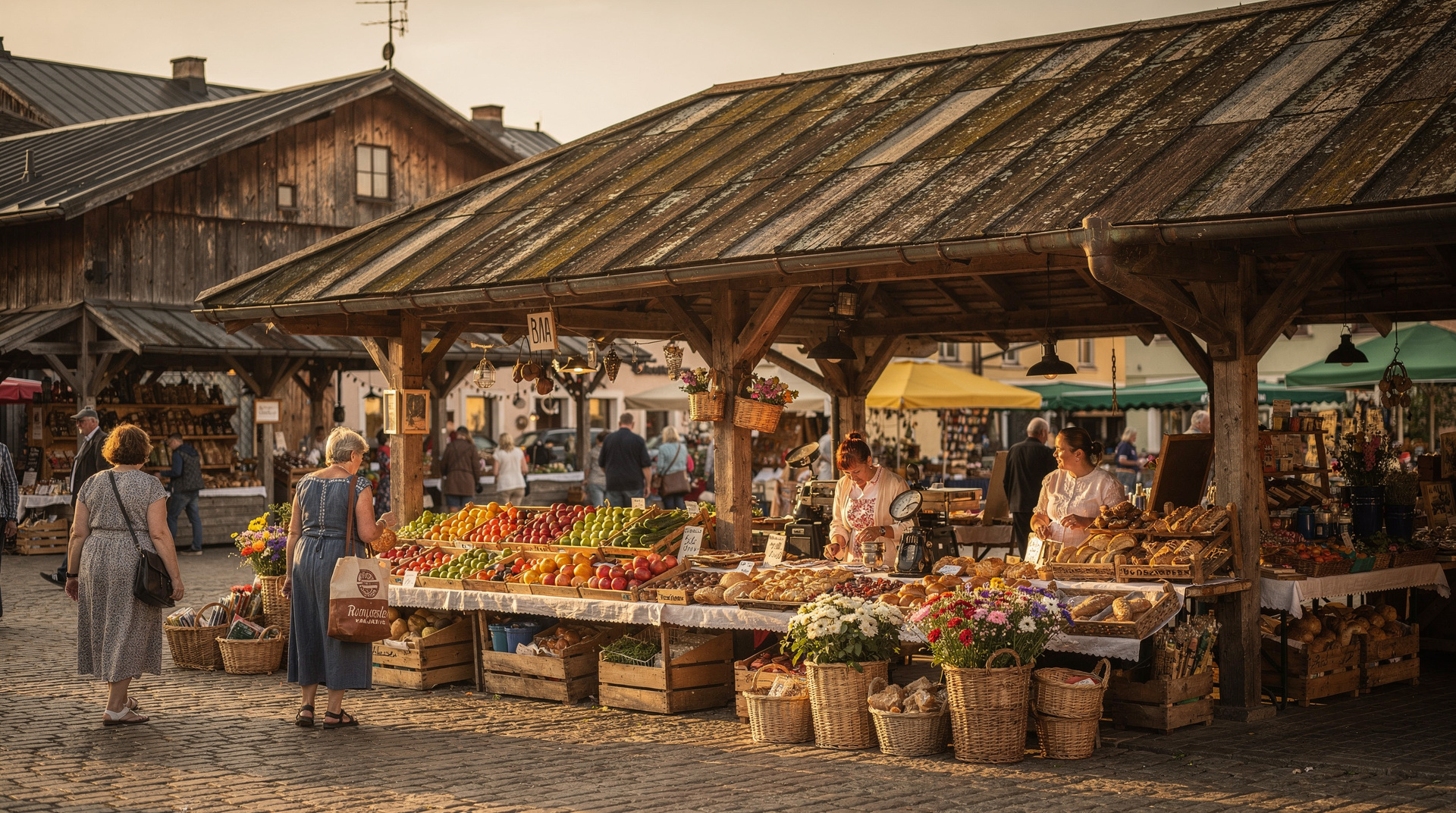
Riga: Central Market traditional food tour in a small group
- Tastings included
- Small group
Riga: Central Market Latvian food tour
- Tastings included
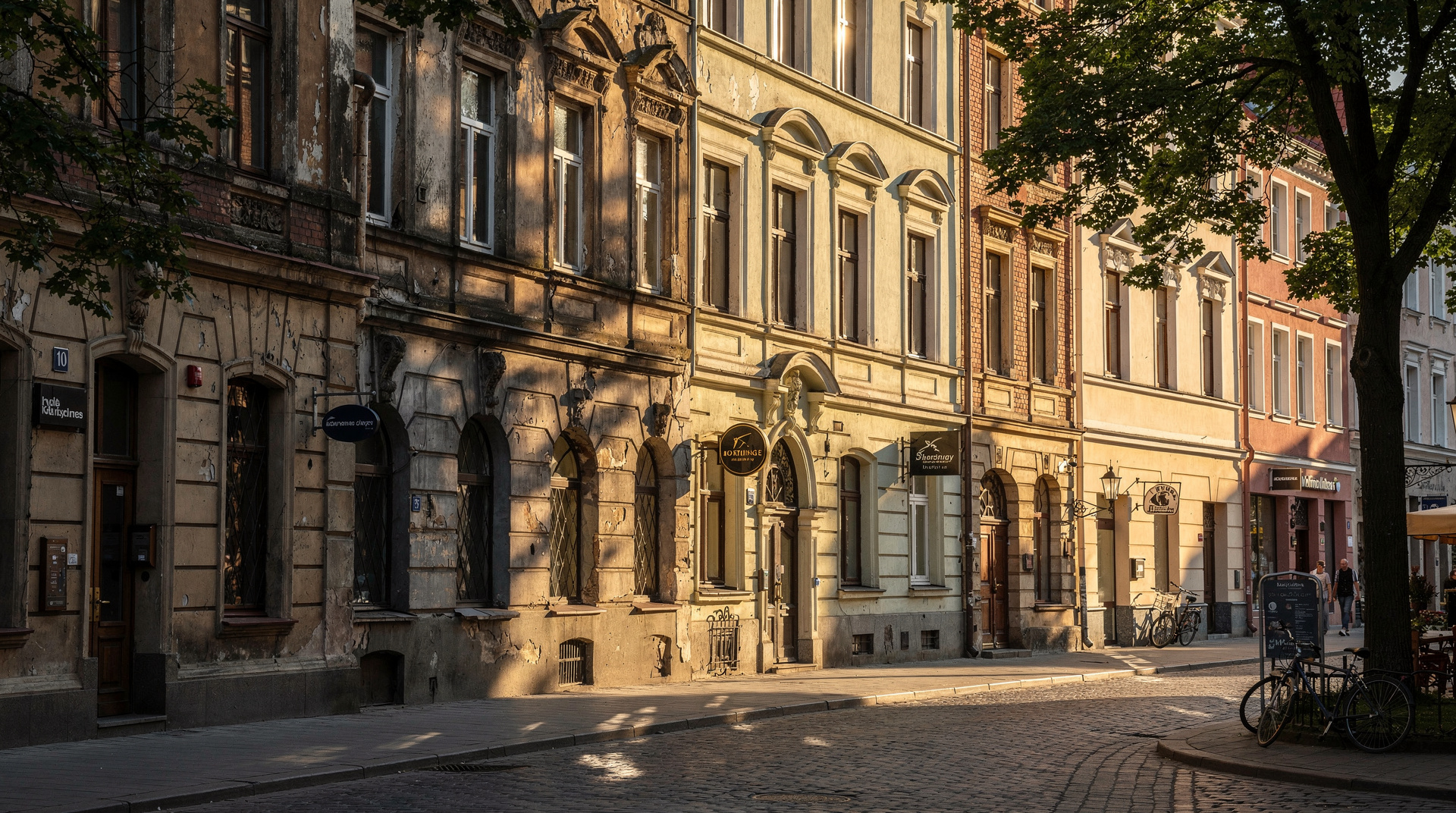
Riga: half-day Jewish history tour
- Free cancellation
- Hotel pickup
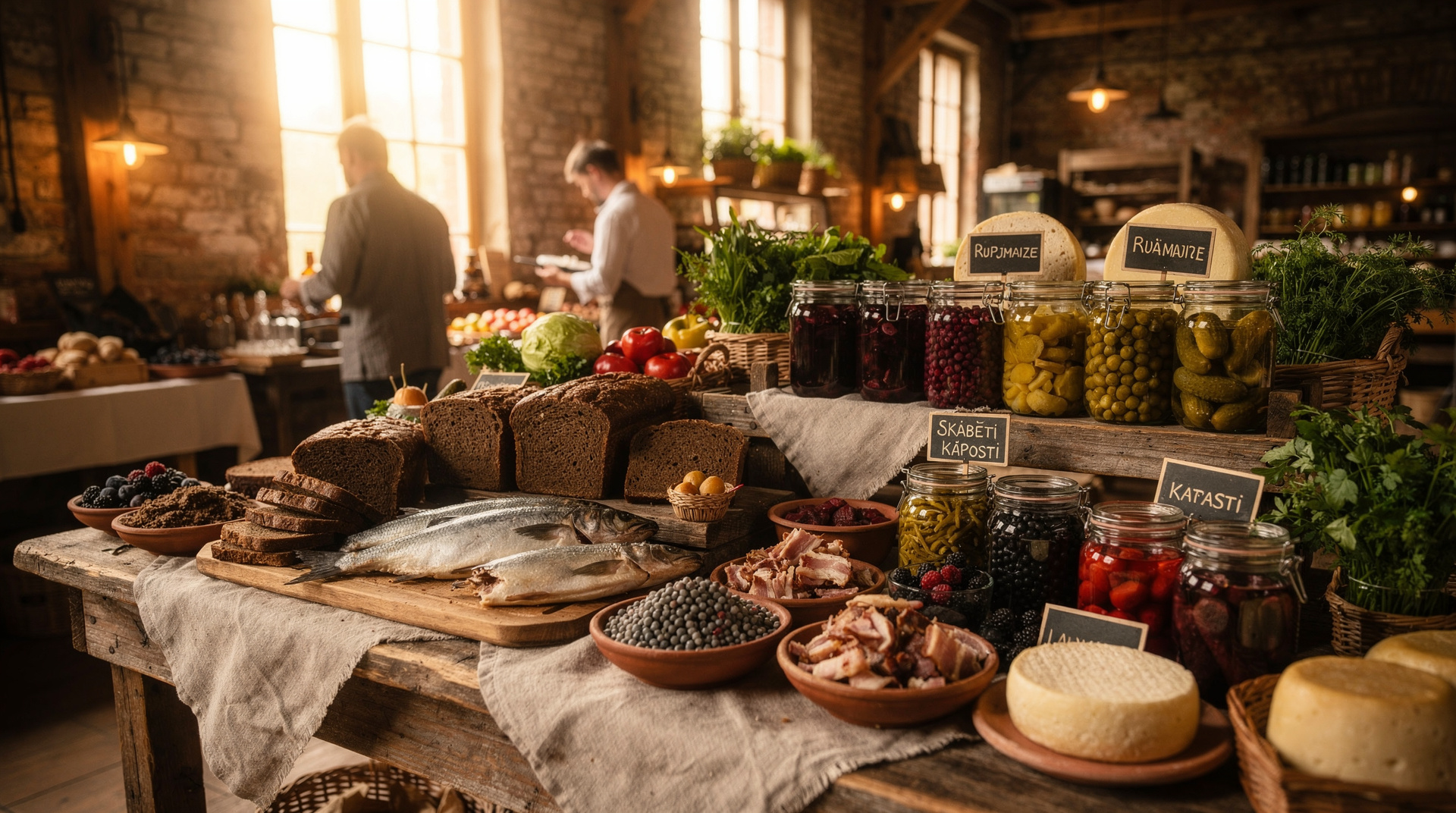
Flavours of Riga: food, history & hidden gems tour
- Tastings included
- Best seller
Riga: food tasting tour of the Central Market
- Small group