Hill of Crosses from Riga: the spiritual journey to Kryžių kalnas
How to visit the Hill of Crosses (Kryžių kalnas) from Riga. Usually combined with Rundāle Palace and Bauska. Practical guide, tours and honest tips.
From Riga: day trip to Hill of Crosses, Rundāle Palace and Bauska
Duration: 10-11 hours
- Hotel pickup
- Best seller
Quick facts
- Location
- 12 km north of Šiauliai, Lithuania
- Distance from Riga
- 175 km by road (~2 h)
- UNESCO
- On the UNESCO Intangible Cultural Heritage list (2024); also significant cultural heritage site
- Entry
- Free, open 24 hours
- Nearby combination
- Rundāle Palace (Latvia, on the route south from Riga)
- Transport
- No direct bus — car or guided tour required
The Hill of Crosses: one of the most unexpected sights in the Baltics
A low hill in the flat Lithuanian countryside, 12 km north of Šiauliai. On it — and around it, and spread across the approaches — somewhere between 100,000 and 200,000 crosses of every conceivable size, material and age. Carved wood, welded iron, rosary beads hung on rusted nails, hand-painted icons, crosses no larger than a thumbnail pressed into the soil beside crosses the height of a building.
The Hill of Crosses (Kryžių kalnas) does not fit easily into standard tourism categories. It is not a monument or a museum. It is not a formal pilgrimage site (though Pope John Paul II visited in 1993, becoming the first pope to stand here). It is something stranger and more affecting: a spontaneous, ongoing act of collective devotion that has continued, through various attempts at suppression, for at least 150 years.
The Soviet authorities bulldozed the hill three times (1961, 1973, 1975). Each time, Lithuanians returned and rebuilt. This resistance is now inseparable from the hill’s significance — the crosses became symbols not only of faith but of national identity and defiance. The UNESCO inscription in 2024 recognises this intangible cultural heritage explicitly.
For visitors to Riga, the Hill of Crosses is almost always combined with Rundāle Palace (in Latvia, roughly on the route south) and occasionally Bauska Castle. This combination — typically structured as a 10–11 hour day from Riga — is one of the most popular day-trips in the region and one of the few that crosses an international border without requiring a separate entry into a third country.
| Where | 12 km north of Šiauliai, Lithuania (175 km from Riga) |
| Cost | Free entry; guided day trip typically €60–100 |
| Time needed | Full day (10–11 hrs from Riga, incl. Rundāle) |
| Getting there | Guided tour or rental car (no direct bus) |
| Best time | April–October; early morning or late afternoon light |
What to see at and around the Hill of Crosses
The hill itself
The hill is small — perhaps 10 metres above the surrounding plain, roughly 100 metres across. It takes 15–20 minutes to walk around the perimeter and another 30–45 minutes to absorb the interior properly, though most visitors spend considerably longer. There is no admission charge. The surrounding paths and fields where crosses have overflowed the hill proper are free to walk.
What strikes most visitors is not the scale (though the density is extraordinary) but the intimacy. Among the iron sculptures and carved folk crosses are family crosses, memorial crosses for the dead and disappeared, crosses placed by the sick asking for recovery, crosses left by people who came for a reason they do not need to explain to anyone. This accumulation of private meaning is what distinguishes the site from a monument.
A Franciscan hermitage sits 200 metres from the hill — completed in 1993 for Pope John Paul II’s visit. The small chapel is open and can be visited independently.
Šiauliai town
Šiauliai (population ~90,000), the nearest city, is 12 km south of the hill. It is not a major tourist destination — it is a working Lithuanian city with a Soviet-era grid centre — but it has a few points of interest: the Cathedral of St Peter and Paul (the tallest church in Lithuania), the Photography Museum (Vilniaus 140) and the Bicycle Museum (a decidedly Lithuanian contribution to local culture history). If your driver or tour includes time in Šiauliai, the Bicycle Museum is worth 45 minutes.
Šiauliai is also a practical lunch stop on any Hill of Crosses day — it has more restaurant options than the village near the hill.
Rundāle Palace (on the way back to Riga)
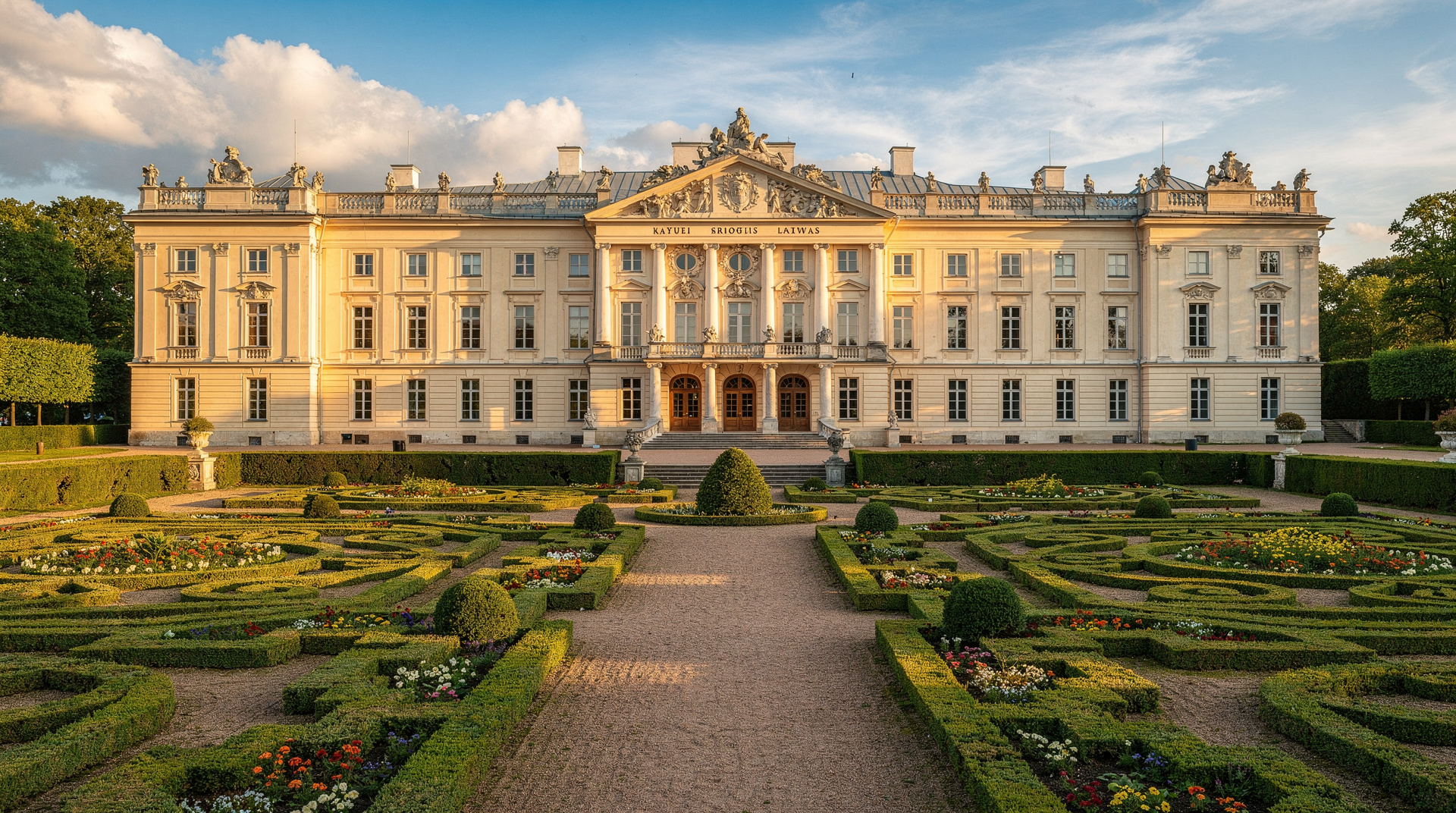
Rundāle Palace, 80 km north of the Hill of Crosses and 80 km south of Riga, is Latvia’s most spectacular baroque palace. Built between 1736 and 1768 to designs by Bartolomeo Rastrelli (the same architect who built the Winter Palace in St Petersburg), it sits in flat Zemgale farmland looking somewhat improbable. The interior — particularly the Gold Hall, White Hall and the Duke’s bedroom suite — is among the finest 18th-century baroque interiors in the Baltics. The gardens were redesigned in the original French formal style in the 1970s–90s and now extend 10 hectares behind the palace.
Entry to the palace: €8–10 depending on which rooms you visit. Gardens: €3 (free in winter). Allow 1.5–2 hours for palace and gardens combined. No guided tour is required — the audio guide (included) is thorough.
See the separate Rundāle Palace page for full detail on the palace itself.
Bauska Castle (optional addition)
Bauska Castle (10 km from Rundāle) is the remains of a 15th–16th century Livonian Order fortress at the confluence of the Mūsa and Mēmele rivers. It is smaller than Cēsis or Sigulda’s castle ruins but has a well-presented visitor centre and good river views. Allow 45 minutes. It is included in many of the guided day-trips listed below as a third stop before Riga.
How to get to the Hill of Crosses from Riga
The challenge of independent access
The Hill of Crosses has no direct bus service from Riga or from Šiauliai city centre. From Šiauliai, the hill is 12 km north — there is no bus route that serves it reliably. Local taxis from Šiauliai to the hill and back cost approximately €20–25 each way (negotiated with the driver to wait or return).
If you travel independently to Šiauliai (by Lux Express bus from Riga, ~2 hours, €10–15), you then need a local taxi for the 12-km round trip. This is achievable but requires coordination: agree on a return time with the driver before they leave.
The practical reality: almost all visitors to the Hill of Crosses from Riga go on an organised day tour or with a rented car. The combination with Rundāle and Bauska (which are 80 km to the north) also does not work easily by public transport — they require a car or guided tour.
Car rental from Riga
Renting a car from Riga is the most flexible option. The routing is straightforward: Riga → Rundāle Palace (80 km south, 1 hour) → Bauska Castle (10 km, 15 minutes) → Hill of Crosses (130 km south into Lithuania, ~1.5 hours from Bauska) → return to Riga (175 km north, ~2 hours). Total driving: roughly 4–4.5 hours, with 5–6 hours of sightseeing in between.
Car rental starts from €40/day for a compact car from Riga centre. A Lithuanian insurance endorsement (usually included in standard rental policies for Schengen travel) is required — confirm before renting.
Guided tours (recommended)
From Riga: day trip to Hill of Crosses, Rundāle Palace and Bauska — a guided 10–11 hour tour from Riga covering all three sites. Hotel pickup included. This is the most popular Hill of Crosses tour from Riga and consistently well reviewed. The best option if you do not want to drive.
From Riga: Rundāle Palace and Hill of Crosses private day trip — a private tour (your own group, your own pace) covering both sites. More expensive than the group tour (from €295 for a private vehicle) but allows flexibility on timing and coverage.
From Vilnius: Hill of Crosses, Rundāle Palace and on to Riga — this tour runs the route in reverse — from Vilnius through the Hill of Crosses and Rundāle, ending in Riga. Useful for visitors doing a Vilnius-to-Riga transfer who want to see both sites on the way. Not a day-trip from Riga, but the same sites in opposite direction.
Where to eat near the Hill of Crosses
At the hill: there is a small food stall selling smoked sausage, hot drinks and amber souvenirs in the car park. Adequate for a snack, not for a meal.
Šiauliai city: the best lunch option on the route. Restoranas Vilktupiai (near the old town) and Samanų Upelis are both reliable mid-range Lithuanian restaurants (mains €10–16). Allow 45 minutes in Šiauliai for lunch if you are self-driving.
Pilies Alus (near Šiauliai): a slightly more touristic option that caters to Hill of Crosses tour groups — reliable Lithuanian cuisine, quick service, no great distinction.
At Bauska or Rundāle: a café operates inside Rundāle Palace during visiting hours (April–October). Pastries, coffee, basic Latvian food. Bauska town has a few cafés near the castle entrance.
Where to stay (if extending beyond a day-trip)
The Hill of Crosses day-trip is almost always done as a return trip from Riga. There is no accommodation directly adjacent to the hill — the nearest hotels are in Šiauliai.
If you are travelling one-way from Riga to Vilnius and the Hill of Crosses is a stop on the way, Vilnius is the logical overnight destination.
Šiauliai hotels (if you need to stay): Hotel Šiauliai and Domina Hotel are the main business-class options. From €45–60/night. Not a destination city.
Rundāle guesthouses: several farmhouses and guesthouses operate near Rundāle village. If you want to see Rundāle in early morning light (before tour groups arrive), staying nearby is worthwhile. Prices from €40–60/night for small guesthouses.
Honest tips for the Hill of Crosses
Plan for more time than you think. The hill takes 20 minutes to see superficially and an indefinite amount of time to absorb properly. Most people who visit talk about standing longer than they expected. Leave at least 1.5 hours at the site — not just the hill itself, but the surrounding fields and the hermitage.
Wear solid footwear. The hill paths are uneven — a mix of wooden boardwalk sections and compacted earth with exposed roots. Muddy in rain. Sandals or city shoes are not appropriate.
The best light is early morning or late afternoon. The hill runs east-west and the crosses face various directions — but the morning and evening sun filtering through the iron and wooden crosses creates the photographs you have seen in travel articles. Midday is flat and crowded.
Group tours arrive between 11:00 and 15:00. If you are self-driving, arrive before 10:00 or after 16:00 for a quieter experience. The hill is accessible 24 hours; overnight visits are possible (and peculiarly atmospheric) but require confident navigation by torchlight.
Bringing your own cross is welcomed. There is no rule against placing a small cross or rosary on the hill. Many visitors bring a small wooden or metal cross as an act of participation rather than observation. These are available at the souvenir stalls in the car park.
Rundāle Palace deserves a proper visit, not a rushed one. If you are combining both sites in a day, see Rundāle in the morning (arrive when it opens, around 10:00) and the Hill of Crosses in the afternoon. The palace takes at least 1.5 hours — rushing it to catch the tour bus is the most common complaint in reviews.
Pack for a long day, not a short excursion. With three sites and two countries in a single day, bring snacks, water and any medication you might need — food options along the route (especially near the hill itself) are limited to a single snack stall, and the day runs 10–11 hours door to door from Riga.
The history of the Hill of Crosses: resistance and faith
The exact origins of the Hill of Crosses are debated among historians. The first reliable documentary evidence dates from the mid-19th century, following the suppression of the November Uprising (1831) against Russian Imperial rule, when Lithuanians are thought to have placed the first crosses as memorials to the uprising’s dead and a statement of continued Catholic identity in the face of Russian Orthodox pressure.
By the turn of the 20th century, the practice was well established. The First World War accelerated it: families unable to bury their dead in distant battlefields placed crosses on the hill as surrogate graves. This function — memorial, proxy burial, statement of identity — gave the site a meaning that transcended any single political or religious moment.
The Soviet period and the three bulldozings are the most extraordinary chapter. The Soviet authorities viewed the hill as a nationalist symbol and a focus of religious resistance. They cleared it by bulldozer in 1961, 1973 and 1975, removing all crosses. Within weeks of each clearing, Lithuanians had rebuilt. The KGB reportedly stationed observers to identify and prosecute those who brought new crosses — the evidence suggests this deterred almost no one. By the 1980s, the hill had become an internationally known symbol of Baltic resistance to Soviet occupation.
Pope John Paul II’s visit in 1993 was a watershed moment. The Pope, who had observed the hill’s significance during his own anti-communist struggle in Poland, chose it as a stopping point on his visit to the newly independent Baltic states. His prayer at the hill — “Thank you, Hill of Crosses, for your witness of faith, for the Baltic peoples’ cry for freedom” — remains inscribed on a plaque near the Franciscan hermitage.
After 1991, crosses arrived from around the world. Latvian, Estonian and Polish delegations placed national crosses. Lithuanian diaspora communities in the United States, Australia and South America sent large carved wooden crosses. The growth since independence has been exponential. The physical act of placing a cross at the hill is now a cultural reflex for Lithuanian Christians that goes beyond formal religious obligation — and increasingly an act of solidarity from visitors of all backgrounds.
Hill of Crosses vs Latvia’s other day trips
The Hill of Crosses is unusual among Riga day trips because it is not in Latvia at all — it involves a border crossing into Lithuania, and the site itself has no entry fee, no gift shop turnstile, no formal visitor infrastructure beyond a car park and a small stall. That makes it a genuinely different kind of day compared with Rundāle Palace or Bauska Castle on their own: those are polished, curated visitor experiences, while the Hill of Crosses is closer to encountering a living folk practice than visiting a museum.
If your interest is architecture and courtly history, Rundāle alone is a satisfying half-day without the extended drive south. If you want the fuller, more emotionally resonant day — and don’t mind 10–11 hours including transit — the three-site combination is worth the distance. Compare this to closer, lower-effort options like Sigulda or Cēsis if a shorter, less demanding day matters more than reaching Lithuania.
Combining with a Vilnius or onward Lithuania trip
Travellers continuing from Riga to Vilnius rather than doing a round-trip day can use the Hill of Crosses as a stop along the way rather than a dedicated excursion — see the Vilnius from Riga page for the wider routing. This one-way version avoids the return drive to Riga and works well for anyone doing a broader Baltic capitals trip; the Baltic capitals 7-day itinerary and the Baltic capitals 7-day road trip guide both cover how to sequence Riga, the Hill of Crosses, Vilnius and the rest of the region without backtracking.
Frequently asked questions about the Hill of Crosses
Where exactly is the Hill of Crosses?
Kryžių kalnas (Hill of Crosses) is located in Lithuania, 12 km north of Šiauliai, on a minor road off the A12 highway. GPS coordinates: 56.01513°N, 23.41656°E. The hill is not within any town — it is in open farmland with a car park and a single road leading to it.
How many crosses are there?
Estimates range from 100,000 to over 200,000. No official count exists — crosses are added continuously, and smaller ones are embedded into larger structures. The number was reliably in the tens of thousands by the early 20th century and has grown significantly since Lithuanian independence in 1990.
Is the Hill of Crosses religious?
Primarily Catholic in tradition — Lithuania is approximately 85% Catholic — though the site has attracted crosses of various Christian denominations and even non-religious memorial objects. It is treated as a sacred space in the Lithuanian cultural understanding. Behaviour should be respectful — photography is fine but keeping noise low is appropriate.
Can I visit the Hill of Crosses independently from Riga?
Yes, but it requires effort. Take a Lux Express bus to Šiauliai (~2 hours, €10–15), then a local taxi to the hill (€20–25 return, agree the price and waiting time before the driver leaves). This works but requires confidence in arranging taxis on arrival in a Lithuanian city. Most visitors prefer a guided tour that handles all logistics.
Is the Hill of Crosses on the way between Riga and Vilnius?
It is close to the route — Šiauliai is roughly halfway. However, the hill is 12 km off the main road, so it requires a deliberate diversion rather than a quick stop. Tour operators that run the Riga–Vilnius transfer with sightseeing stops include it; self-driving visitors need to factor in 45–60 minutes extra (detour + visit).
What makes the Hill of Crosses UNESCO-listed?
The UNESCO inscription (2024) covers the site as an example of intangible cultural heritage — specifically the living tradition of cross-crafting and the ongoing pilgrimage practice. The site’s significance lies not only in the physical crosses but in the cultural continuity of the practice, including its use as a symbol of resistance during Soviet occupation.
Is Rundāle Palace worth visiting alongside the Hill of Crosses?
Yes — the combination is the standard day-trip from Riga for a reason. Rundāle is one of the finest baroque palaces in the entire Baltic region, often compared to Versailles in its ambition if not its scale. The two sites are complementary: Rundāle is secular, courtly, architecturally refined; the Hill of Crosses is spiritual, folk, uncontrolled. Together they give a day that covers the full range of the region’s character.
How do I get from the Hill of Crosses to Vilnius?
From the hill, return to Šiauliai (12 km south by taxi) and catch a bus or take your hired car south on the A12 to Vilnius (~150 km, ~1.5 hours). Lux Express and Ecolines serve the Šiauliai–Vilnius route. If you are with a guide, the transfer continues directly.
Is the Hill of Crosses worth it if I’ve already seen Rundāle Palace separately?
Yes, if the hill itself interests you — it stands on its own as a destination regardless of whether you’ve seen Rundāle. Some tour operators offer a Hill of Crosses–only itinerary without Rundāle, which shortens the day but still requires the same 175 km each way. Check the specific tour itinerary before booking if you want to avoid repeating a Rundāle visit you’ve already done.
How does the Hill of Crosses compare to other pilgrimage or memorial sites in the Baltics?
It is distinct in character from most other Baltic memorial sites. Where places like the Museum of the Occupation of Latvia present curated historical narrative, the Hill of Crosses is an ongoing, uncurated practice — visitors add crosses today just as Lithuanians did in the 19th century. This makes it feel less like a fixed historical exhibit and more like an accumulating, living tradition, which is part of why photographers and spiritually inclined travellers find it particularly affecting.
Top experiences
Bookable activities with verified prices and instant confirmation on GetYourGuide.