Daugavpils
Daugavpils visitor guide: the Mark Rothko Art Centre, Daugavpils Fortress, Soviet-era city centre and why Latvia's second city is worth the journey.
Audio tour of Daugavpils Fortress
Duration: At your pace
- Self-guided
- Audio guide
Quick facts
- Distance from Riga
- 230 km southeast
- Train from Riga
- ~3.5 hours, ~€8–12
- Bus from Riga
- ~3 hours, ~€8
- Population
- ~75,000 (Latvia's 2nd city)
- Fortress entry
- Free (grounds); Rothko Centre ~€10
Latvia’s other city: fortress, Rothko and Russian culture
Daugavpils is the kind of destination that travel writers call “authentic” when they mean “not designed for tourists.” Latvia’s second city, with a population of around 75,000, sits at the southeastern edge of the country near the Lithuanian and Belarusian borders. It is primarily Russian-speaking, noticeably less prosperous than Riga, and possessed of a specific atmosphere that is unlike anything in the Latvian west — something between Soviet-era East Europe and the particular culture of the Latgale region, which has its own dialect, ceramic traditions and Catholic majority (distinctive in largely Lutheran Latvia).
Two things make Daugavpils genuinely worth the 230 km journey from Riga. The first is the Daugavpils Fortress — a massive Napoleonic-era military complex built in the early 19th century, covering several square kilometres, still partially inhabited (some buildings are apartments and institutions), and being gradually restored and opened to visitors.
The scale is extraordinary: this is the best-preserved early-19th-century military fortress in the entire Baltic and post-Soviet region. The second is the Mark Rothko Art Centre — the only museum in the world dedicated to Mark Rothko, who was born in Daugavpils in 1903 (when the city was part of the Russian Empire and called Dvinsk). The centre holds the largest collection of Rothko works in Europe.
Together, they make a compelling case for an overnight trip rather than a rushed day trip. But many visitors do it in a day — the train from Riga is 3.5 hours and runs several times daily.
Daugavpils has a complicated modern history that is part of its interest. Founded as Dünaburg (later Dvinsk under Russian rule) at the confluence of the Daugava River and important east-west trade routes, the city was historically a hub of Jewish culture in the Russian Empire — the Daugavpils Jewish community was large and culturally significant, and it was into this environment that Marcus Rothkowitz (later Mark Rothko) was born in 1903. The Holocaust devastated this community; Daugavpils lost the majority of its Jewish population in 1941–1942. The city’s Jewish heritage is marked by memorials and is part of the narrative told in local museums.
The current demographics of Daugavpils reflect its Soviet-era history as an industrial and military centre. Large numbers of Russian and Belarusian workers were relocated to the city during the Soviet period to work in factories and the military installations associated with the fortress. Today the city is approximately 54% Russian-speaking, making it the most Russian of Latvia’s cities, and its cultural character is genuinely distinct from western Latvia. For visitors interested in the diversity of Latvian society and the complexities of post-Soviet Baltic identity, Daugavpils offers a perspective not available anywhere else in the country.
The Latgale region surrounding the city is also culturally specific: it was historically part of the Polish-Lithuanian Commonwealth while western Latvia was under Swedish and then Russian rule, and as a result it has a predominantly Catholic character (in contrast to the Lutheran west) and preserves Latgale dialect literature and folk traditions that are distinct from standard Latvian. The city’s name in Latgalian is “Daugpiļs.”
| Where | Latgale, 230 km southeast of Riga |
| Cost | Fortress grounds free; Rothko Centre ~€10 |
| Time needed | Full day, or overnight for the lake district too |
| Getting there | Train (~3.5 hrs) or bus (~3 hrs) from Riga |
| Best time | May–September; museums open year-round |
Audio tour of Daugavpils Fortress
- Self-guided
- Audio guide
What to see and do in Daugavpils
The Daugavpils Fortress
Built between 1810 and 1833 to defend the Russian Empire’s western border, the Daugavpils Fortress is the most intact 19th-century military bastion in the post-Soviet space. The complex covers approximately 600 hectares and is enclosed within star-shaped earth ramparts and brick curtain walls. Inside are dozens of buildings: barracks, officers’ quarters, arsenals, a small Orthodox church, an arsenal that is being converted to cultural use.
The fortress is not a conventional museum — it is a living complex where restoration is ongoing and parts are used as functioning institutions. Walking the fortress grounds is free and can take 1.5–3 hours depending on how far you explore. The audio tour (available via an app or a physical device from the visitor centre) guides you to the key sites with historical commentary.
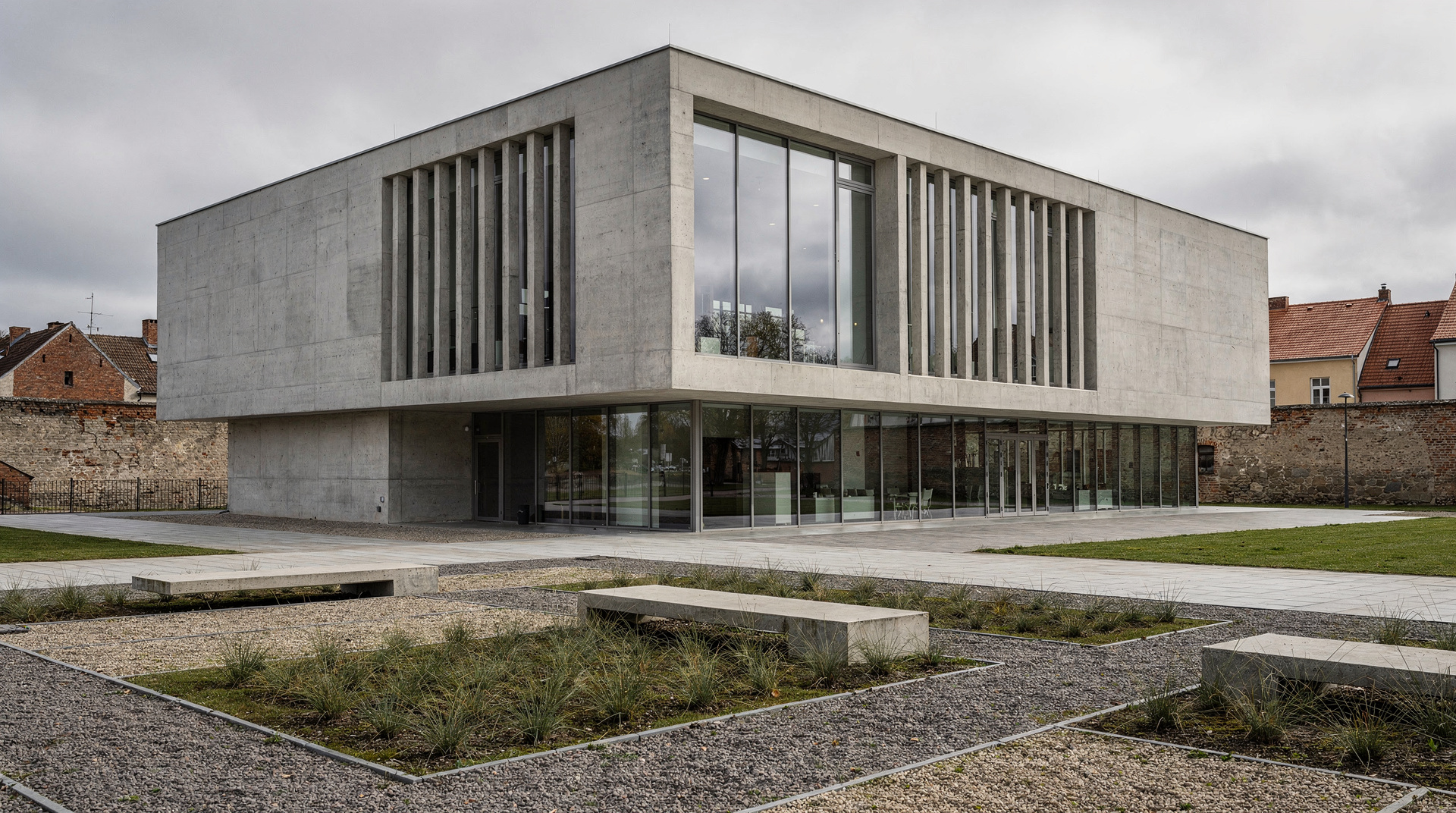
The Mark Rothko Art Centre is located within the fortress complex in a restored arsenal building.
Mark Rothko Art Centre
Mark Rothko (born Markus Yakovlevich Rothkowitz, 1903, Dvinsk) emigrated to the United States at age 10 and became one of the key figures in Abstract Expressionism, known particularly for his large-format colour field paintings. The Daugavpils connection is biographical rather than directly artistic — Rothko left as a child and never returned — but the city has built a genuinely impressive museum around the association.
The Rothko Centre holds five original Rothko works (on rotating loan from US collections) and a large permanent collection of works by Latvian artists influenced by Rothko and by the colour field tradition. The building — the restored arsenal — is beautifully adapted for the works. Even without prior knowledge of or interest in Rothko, the combination of the building, the light, and the scale of the works tends to be affecting.
Entry is approximately €10. Audio guide included. Allow 1–1.5 hours.
Daugavpils city centre and the multicultural character of Latgale
The city centre — Unity Square (Vienības laukums) and the surrounding streets — has a mix of 19th-century Russian Empire architecture, Soviet-era apartment blocks, and recent renovation work. The Orthodox church of Saints Boris and Gleb on the square is one of the finest Orthodox buildings in Latvia. The Roman Catholic church nearby reflects the Latgale region’s predominantly Catholic heritage.
Walking the central streets for an hour gives a clear sense of the city’s distinctive multicultural character: Russian-language shop signs alongside Latvian, the hearing of multiple languages on a single street, the faces different in character from western Latvia. Daugavpils feels like a gateway to a different region of Europe.
Latgale lakes
The Latgale region is known as “the land of the blue lakes” — hundreds of small glacial lakes cover the landscape east and north of Daugavpils. Lake Drīdzis, southeast of the city, is the deepest lake in the Baltic states at 65 metres. Day and half-day excursions to the lake district from Daugavpils are easy by car and give a genuine sense of the Latgale landscape, which is gentler and more lake-studded than the Gauja valley.
The lake district is particularly beautiful in summer when the lakes warm to swimming temperature (18–22°C) and the surrounding forests reflect in the still water. Local families use the lakes for fishing, swimming and camping. For visitors, the combination of natural beauty and the absence of tourist infrastructure gives the lake district a genuinely off-the-beaten-track character.
The Daugava River embankment
The Daugava River at Daugavpils is significantly wider than at Riga — the river has been joined by several tributaries by this point and spreads to several hundred metres. The city embankment offers views across the river toward Lithuania (the state border is a few kilometres south) and along the water. The fortress walls are visible from the embankment, and the combination of scale — wide river, massive fortress, vast sky — gives Daugavpils a monumental quality that is quite different from any other Latvian city.
Daugavpils Regional Art Museum
Separate from the Rothko Centre, the Daugavpils Regional Art Museum (Mark Rothko Arts Centre is sometimes confused with this) houses an extensive collection of Latvian and regional art from the 19th century to the present. The collection is strong on local Latgale artists and on the specific traditions of the region. Entry is modest. Located in the city centre, it is a half-hour addition to a fortress visit.
Jewish heritage sites
The Jewish heritage of Daugavpils is marked by several memorial sites in the city. The former Great Synagogue site, the deportation memorial on the city outskirts, and the Daugavpils Jewish cemetery (one of the largest surviving Jewish cemeteries in Latvia) are accessible and maintained. For visitors with a specific interest in Jewish heritage, the Riga Jewish history walking guide and the Daugavpils sites together give a more complete picture of Jewish culture in pre-war Latvia.
How to get to Daugavpils from Riga
By train
Pasažieru Vilciens from Riga Central to Daugavpils: approximately 3.5 hours, fare €8–12 depending on class and booking timing. Trains run several times daily. The journey passes through the Latgale region; the landscape changes from the familiar western Latvia farmland to a more lake-dotted, pine-forested character.
From Daugavpils station, the fortress is accessible by a 20-minute walk or a short taxi ride (~€5).
By bus
Lux Express and Ecolines buses from Riga to Daugavpils: approximately 3 hours, fare €8–15. Faster than the train and comparable in price. Buses drop at the Daugavpils bus station in the city centre.
By car
Drive southeast from Riga on the A6 highway toward Daugavpils. Journey time is approximately 2.5–3 hours. A car gives access to the Latgale lake district and makes the fortress complex exploration more flexible.
Where to eat in Daugavpils
Gubernators (Lāčplēša iela 10) is the most consistently recommended restaurant for visitors — European and Latvian cuisine, reliable quality, mains €12–18. Located in a restored 19th-century building near the city centre.
M6 Café inside the Rothko Centre is good for lunch in an architecturally impressive setting — the café is in the restored arsenal building. Sandwiches, soups, coffee.
Pelmeni cafés are scattered through the city centre — Daugavpils has a strong pelmeni culture (the Russian tradition of filled pasta dumplings), and these unpretentious cafés serve a bowl of pelmeni for €3–5. The local style tends toward pork-and-onion and occasionally beef fillings.
Where to stay
For a day trip from Riga (train there and back on the same day), Daugavpils is manageable — 3.5 hours each way, with 5–6 hours in the city. For a more relaxed visit that includes the lake district and the fortress in full, an overnight stay is recommended.
Hotels in Daugavpils are noticeably cheaper than Riga: the Park Hotel Latgola (the main city-centre hotel) runs €50–70 per double. Guesthouses and aparthotels are available from €35–50. See the Riga 7-day Latvia grand tour itinerary for how to work Daugavpils into a longer Latvia trip.
Honest tips for Daugavpils
Daugavpils is not polished for tourists and that is part of its value. If you expect the same infrastructure as Riga or even Cēsis, you will be disappointed. If you come genuinely curious about a Latvian city with a different ethnic and cultural character, you will find it extremely interesting. The lack of tourist infrastructure is also reflected in prices — meals and accommodation are significantly cheaper than anywhere else in Latvia.
The fortress is enormous and only partially accessible. Do not expect to walk into the fortress and find a clear visitor route with signs in English. Parts are under renovation, parts are private residential or institutional use, and parts are simply open ground. The audio tour is the best guide to navigating the accessible sections and understanding what you are seeing.
Russian is the dominant language. In most shops, cafés and public spaces in Daugavpils, Russian is the working language. Latvian and some English are understood, but you will hear predominantly Russian. This is not a problem for visitors — it is simply part of the city’s character.
The blog post on Daugavpils — we visited the Mark Rothko Centre in Daugavpils — covers the visit experience in detail.
Winter is not the recommended season. Daugavpils winters are cold (similar to Riga, -5 to -15°C) and the city has less winter tourism infrastructure than the more visited parts of Latvia. Spring through autumn is the practical visiting season.
Bring cash for smaller cafés. Card acceptance is close to universal in Riga but noticeably patchier in Daugavpils’s pelmeni cafés and smaller local businesses. Carry some cash for the cheaper, more local end of the food scene — it is also where the best value is.
Combine the trip with a Latgale focus, not a “second Riga” expectation. Visitors who arrive expecting a smaller version of Riga’s Old Town are usually disappointed; visitors who arrive curious about a genuinely different regional culture — Russian-speaking, Catholic, Latgalian — tend to find it one of the more memorable stops in the country.
Frequently asked questions about Daugavpils
Is Daugavpils worth the journey from Riga?
For visitors with a genuine interest in Soviet history, 19th-century military architecture or Mark Rothko’s work, yes — the fortress and Rothko Centre together constitute a genuinely distinctive combination not found anywhere else in Europe. For visitors looking for another picturesque town or castle, there are closer and easier alternatives.
How long does it take to get from Riga to Daugavpils?
By train: approximately 3.5 hours. By bus: approximately 3 hours. By car: 2.5–3 hours depending on traffic.
What is the Mark Rothko Art Centre?
A museum and contemporary art centre located within the Daugavpils Fortress, dedicated to the work of Mark Rothko (born in Daugavpils in 1903) and to Latvian artists influenced by the colour field tradition. It holds five original Rothko works and a significant collection of Latvian contemporary art.
Is the Daugavpils Fortress safe to explore?
The fortress grounds are open to the public and safe to walk. Parts of the complex are under ongoing restoration and some areas have construction activity. Stick to the marked visitor routes and the audio guide path. The fortress at night is not recommended for solo visitors — it is large, not well-lit, and not patrolled.
What language is spoken in Daugavpils?
Daugavpils is predominantly Russian-speaking. Latvian is the official language and is understood by most people, but Russian is the default working language in most everyday contexts. English is spoken at the Rothko Centre, the better hotels and most tourist-facing businesses.
Can I do Daugavpils as a day trip from Riga?
Technically yes — the train there and back in a day is possible, giving 5–6 hours in the city. Practically, it is a long and tiring day. An overnight stay gives a more relaxed visit with time for both the fortress and the lake district, and the cost savings on accommodation make it financially straightforward.
Is Daugavpils safe for tourists?
Yes. Despite its industrial character and the occasional online commentary suggesting otherwise, Daugavpils is a safe city for visitors. Standard urban precautions apply — avoid poorly lit streets very late at night, keep aware of your belongings in crowded areas. The tourist-relevant parts of the city (fortress, Rothko Centre, city centre) are completely safe at all normal visiting hours.
What should I know about the Russian-speaking culture in Daugavpils?
Daugavpils is a city where Russian is the dominant spoken language in everyday life. This is a fact of the city’s demographic history and current character, not something that should concern visitors. Most people in tourist-facing businesses (hotels, the Rothko Centre, restaurants) speak some English. On the street, Russian or basic Latvian will be more useful than English. The city’s cultural life — events, local media, social scenes — operates primarily in Russian, which gives visitors a genuine window into a Latvian city that functions differently from the Latvian-majority west of the country.
Is a car necessary to see Daugavpils properly?
No, not for the core sights. The fortress, the Rothko Centre and the city centre are all walkable from the train station or reachable by short taxi rides, so a day trip by train or bus covers the essentials without a car. A car becomes valuable only if you want to extend into the Latgale lake district (Lake Drīdzis, Aglona Basilica) or explore smaller Latgale towns, which have no practical public transport connections from Daugavpils itself.
How does Daugavpils fit into a longer Latvia itinerary?
Most effectively as a two-night addition to a 7-day Latvia trip, following the Riga–Gauja–Zemgale circuit. The 7-day Latvia grand tour itinerary builds in a Daugavpils overnight to allow time for both the fortress and the Latgale lake district. Visitors who come to Latvia specifically for the Soviet heritage — the KGB Corner House in Riga, the Soviet bunker at Līgatne, the Occupation Museum — will find Daugavpils the most substantial single site for this interest in the country.
What else is in the Latgale region?
The Latgale lake district (hundreds of glacial lakes, Lake Drīdzis is the deepest in the Baltics), the Aglona Basilica (the most important Catholic pilgrimage site in Latvia, drawing tens of thousands on August 15), and the distinctive Latgale folk traditions including the local pottery style (Latgale pottery is among the most recognisable regional crafts in Latvia). The broader Latgale region page covers the wider area beyond Daugavpils itself, including smaller towns and the lake district in more depth.
Daugavpils vs Latvia’s other day trips
It is worth being direct about how Daugavpils compares to the more commonly visited destinations from Riga. Unlike Sigulda, Cēsis or Jūrmala, which are polished, well-signed, English-friendly day trips, Daugavpils requires more independence and curiosity — there is no equivalent of a tourist information centre with English-language maps on every corner, and the working language on the street is Russian rather than Latvian or English.
What Daugavpils offers in return is something none of the western Latvia destinations can: a city built around a genuinely different linguistic and religious culture, the single most complete 19th-century fortress in the region, and a world-class single-artist museum. Visitors who have already covered the Gauja valley and Zemgale circuits and want to see a genuinely different side of the country are the best audience for Daugavpils; first-time visitors with only two or three days should prioritise Sigulda, Rundāle or Jūrmala first.
Combining Daugavpils with the wider Latgale lake district
A car makes the biggest difference to a Daugavpils visit. Without one, you are limited to the fortress, the Rothko Centre and the city centre — a full but city-bound day. With a car, the Latgale lake district opens up: Lake Drīdzis (the deepest lake in the Baltic states, about 45 minutes from the city) and the Aglona Basilica (about an hour north, Latvia’s most important Catholic pilgrimage site, especially striking around the 15 August feast day when tens of thousands of pilgrims arrive) both make realistic half-day additions if you have a second day in the region. Renting a car in Daugavpils itself is possible but limited; most visitors rent in Riga and drive the full route.
Top experiences
Bookable activities with verified prices and instant confirmation on GetYourGuide.